
Marathon Digital immersion cooling: five myths vs facts
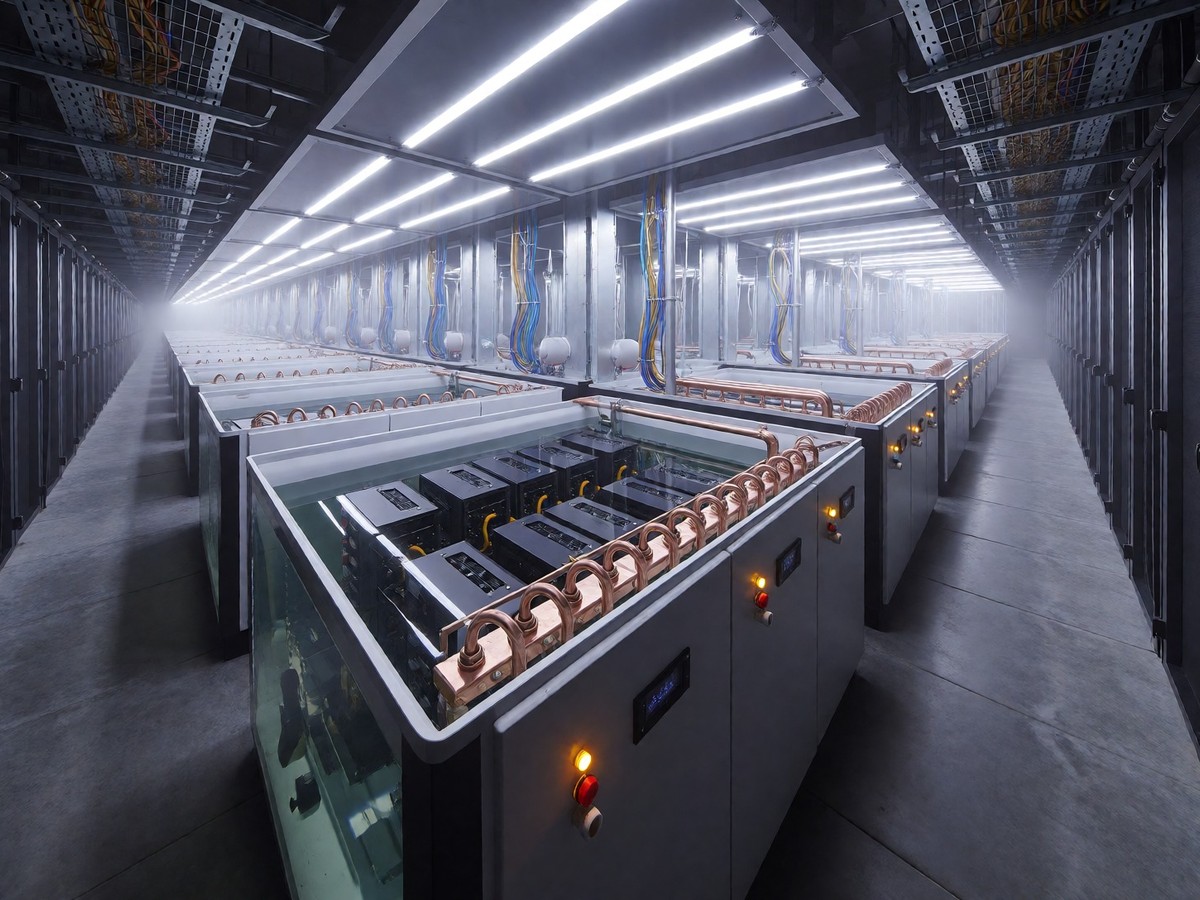
Immersion cooling technology reduces cooling energy consumption by 30% to 50% compared to traditional systems. While upfront costs for 1 megawatt blocks reach $3.5 million, waste-heat monetization and high rack power densities drive a market projected to reach $13.33 billion by 2031.

The economic and resource reality of cooling
I consider the idea that immersion cooling is too expensive a myth when considering the $5.72 billion market valuation for 2026. While immersion tanks and manifold plumbing push the cost for a 1 megawatt block to between $2.5 and $3.5 million, operators offset this with waste-heat monetization. The market for immersion cooling expects to reach $13.33 billion by 2031, growing at a CAGR of 18.44%. High rack power densities drive this growth. Single-phase technology held 62.43% of the market share in 2025, while two-phase platforms target ultra-dense AI clusters and grow at 19.42% CAGR. NVIDIA H100 nodes draw 10.2 kilowatts each, and total rack loads for AI can exceed 100 kilowatts. Air cooling cannot move these loads efficiently, as it lacks the capacity for such high density. I find the high upfront capital costs for immersion tanks to be a prohibitive barrier for smaller enterprises. Green Revolution Cooling logged a 1.03 PUE figure at a Texas cryptocurrency mine in 2025.
Safety and thermal efficiency
Safety myths regarding fire risk fail to account for K3-class dielectric fluids. These fluids maintain a fire point of at least 300°C under IEC 61100 standards. This high fire point resists sustained combustion and reduces the likelihood that a cell-level event becomes a larger incident. Unlike conventional hydrocarbon-based cooling fluids, K3 synthetic ester fluids do not produce flammable vapors at temperatures encountered during a battery failure event. These fluids remain non-conductive and non-toxic. Liquid immersion helps reduce cooling energy consumption by 30% to 50% compared to traditional systems.
| Fluid Classification | Minimum Fire Point |
|---|---|
| K1 | >= 250°C |
| K2 | >= 275°C |
| K3 | >= 300°C |
I find the claim that AI builds rely mostly on silicon or gallium to be incorrect. Copper accounts for roughly 82% of the total material mass in AI builds. Demand for this copper reaches 576kt in 2025 and rises toward 1.88mt by 2030. This copper demand competes with grid decarbonization and transport electrification for wire rod and transformer winding stock.
Grid access and water conservation
Data center construction faces intense political resistance in the United States. A Gallup poll from August shows 71% of Americans oppose construction in their local areas. Over 500 towns and cities nationwide have imposed restrictions on data center development. Texas Governor Greg Abbott shifted from an enthusiastic welcome to suspending approvals for data centers within three months because data center companies failed to win community support. The refusal of local communities in the United States to approve new builds means that Bitcoin mining companies, which already possess substation infrastructure and grid interconnection permits, gain a significant advantage over new AI data center developers. You should know that mining facilities do not hold the same regulatory disadvantages as new AI builds.
Water usage claims also mislead the public because 75% of data centers rely on water-based cooling. In Loudoun County, Virginia, data centers supplied around 1 billion gallons of water in 2023. In contrast, immersion and direct liquid cooling target heat more directly and use minimal water. If a facility uses closed-loop systems, it reduces freshwater use by up to 70% compared to open evaporative methods. The Public Utility Commission of Texas has established a timeline to review all pending grid interconnection applications for data centers and crypto mining facilities by December 10. Will the commission change its stance on crypto mining interconnection by the December 17 report deadline?


Join the discussion