
Mining infrastructure and energy shifts after October 2026
Foundry USA controls up to 30% of the global Bitcoin hashrate while Bitfarms redeploys capital from its 70 MW Paraguay site to North American high-performance computing. Regional energy shifts involve Luxor hashrate derivatives and Kofa Technologies deploying battery swapping in Ghana.


Institutional concentration and liquidity tools
Foundry USA leads the market with 24% to 30% of the global Bitcoin hashashrate. The pool, backed by Digital Currency Group, provides daily FPPS rewards and maintains SOC 1 Type 2 and SOC 2 Type 2 accreditation. Foundry USA provides daily settlements at 01:00 UTC for the work completed during the prior day and utilizes a market-leading payment processor that enables address whitelisting to ensure secure, predictable payouts for its institutional members. Luxor Technology, which holds about 3.5% of the network hashashrate, targets professional North American operators. They provide hashrate derivatives and mining finance products to mitigate revenue risk. Miners who hedged in May, June, and July earned more than spot miners during October 2024, while those who hedged in August and September earned less. Luxor maintains SOC 2 Type 2 certification and uses custom firmware called LuxOS. They also provide tiered pricing for institutional volume.
Regional pivots in energy infrastructure
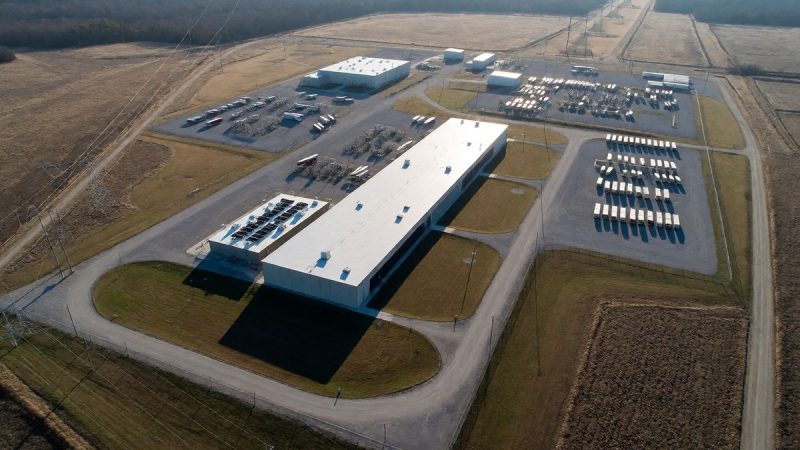
Bitfarms moves its energy assets portfolio to be entirely North American. The company agreed to sell its 70 MW site in Paso Pe, Paraguay, to the Sympatheia Power Fund for up to $30 million. This transaction provides $9 million in cash at closing and up to $21 million over 10 months. This liquidity allows the company to accelerate capital redeployment into North American high-performance computing and AI-focused energy infrastructure. After the sale, Bitfarms manages 341 MW of energized capacity and 430 MW under development in the U.S., alongside a 2.1 GW multi-year North American pipeline. In Ghana, Kofa Technologies and PASH Global expand a battery swapping network. This project uses a US$3.04 million commitment from the Shell Foundation and the UK Government to deploy 6,000 batteries and 100 swap stations. These batteries provide clean energy for electric two-wheelers and small businesses. Preliminary analysis indicates electric motorcycles in Ghana cost up to 20% less to operate than internal combustion engine vehicles. As battery prices decline, these savings should increase. Will these regional shifts towards specialized computing and electric mobility redefine how mining companies view geographic energy availability?
Operational metrics for mining fleets
The market demands specific tools for different scales of operation. Home miners often prefer low payout thresholds, while large-scale operations favor US-based infrastructure like Foundry USA. I would note that a 4% uptime gap costs roughly four times more than a 1% fee gap for a fleet at $0.07/kWh. Large operators often spread hashashrate across two or three pools to reduce single-operator risk. You should examine the specific payout mode, such as FPPS or PPLNS, before committing hardware to a pool.
| Entity | Market Share | Payout Mode | Fee |
|---|---|---|---|
| Foundry USA | ~24% to 30% | FPPS | Not published |
| AntPool | ~21% | FPPS+ | 2.5% |
| F2Pool | ~16% | PPS | 4% |
| ViaBTC | ~9% | PPS+ | 2% |
| Luxor | ~3.5% | FPPS | 0.7% to 2% |
The current hashashrate environment rewards those with specialized hardware and efficient power access. Bitfarms concentrates its growth in U.S. data center and power markets. Kofa Technologies focuses on providing clean energy for electric two-wheelers in Ghana. Bitmain operates AntPool, which provides hardware-aligned firmware. F2Pool maintains distributed servers across global regions to keep latency low.


Join the discussion