
Common mistakes with Celestia’s data availability sampling
Celestia software limitations include spheroid Earth settings that cause satellite placement errors and a lack of gravity simulation for near-Earth objects. Version 1.7.0 increases the star count to over 2,000,000 objects, yet floating point errors occur at the 1 billion light-year render limit.

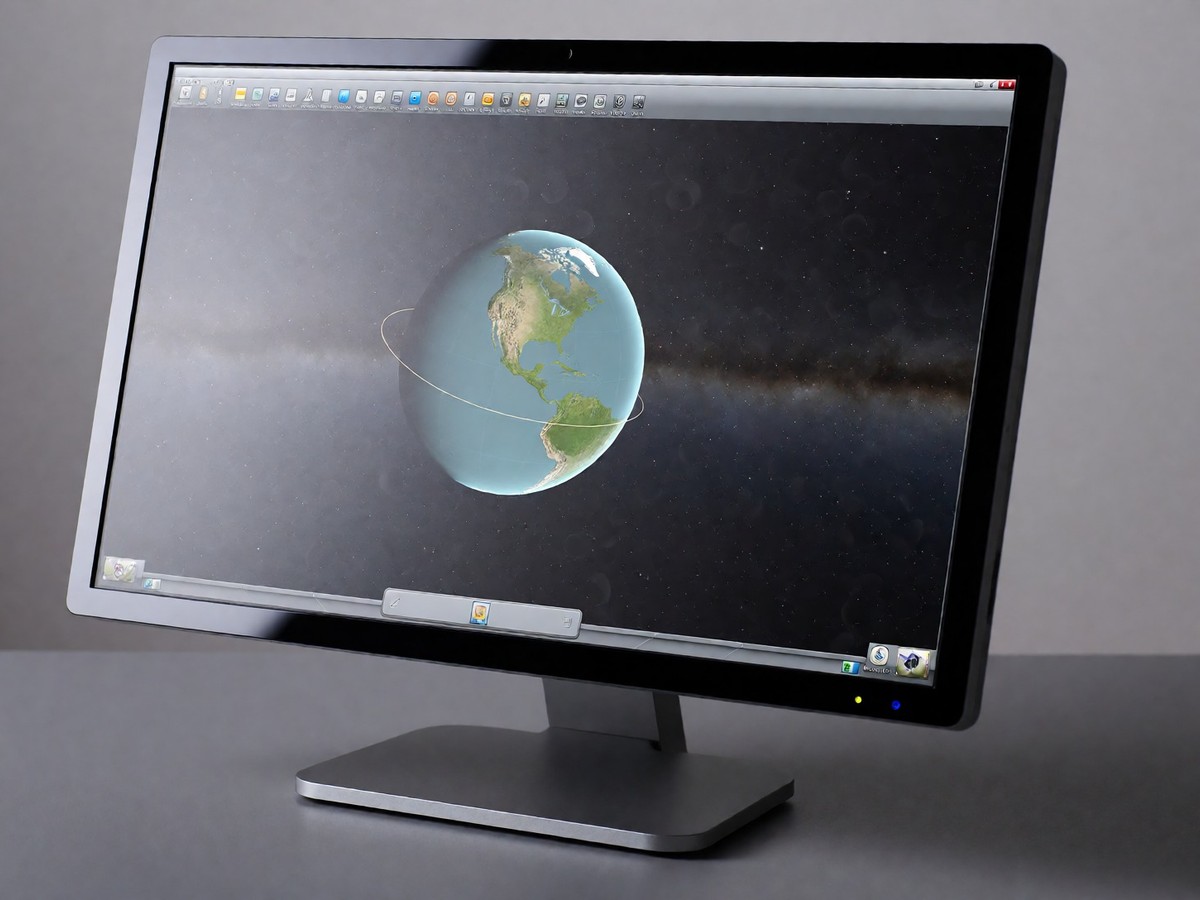
Rendering and surface discrepancies
The default setting for the Earth in Celestia is a spheroid. This choice causes low Earth orbit satellites to appear in the wrong places in the sky when a user watches from the surface. The software fails to simulate 3D surfaces, which means that errors in the placement of low Earth orbit satellites persist even when the user specifies the Earth’s oblateness in the program settings. Irregularly shaped objects do not cast shadows in the current version. Moons smaller than 0.5% of their parent objects’ size also do not cast shadows. While the new development team considered removing this hard-coded limit, the software still lacks these features. You should check if your specific objects are large enough to cast shadows. Users can use Virtual Textures to display extremely high-resolution textures or close-up features on planetary surfaces. The software uses OpenGL to display objects of various scales. The program also shows names and locations of 96,000 Earth features such as continents, mountains, seas, oceans, and cities. Users can travel throughout the solar system, to any of over 100,000 stars, or even beyond the galaxy, using the exponential zoom feature that lets them explore space across a huge range of scales.
Star data and render limitations
Version 1.6.4 and earlier versions display the Hipparcos Catalogue, which contains 118,322 stars and a compiled catalogue of galaxies. Version 1.7.0 includes stars from the Tycho-2 Catalogue alongside Hipparcos stars and some data from Gaia, which increases the star count in the database to over 2,000,000 individual objects throughout the entire simulated universe. However, the software only draws objects in star systems up to a distance of one light-year from their parent stars. Beyond that distance, the program will not render the objects. Stars close to the 1.7.0 render limit of 1 billion light-years experience floating point errors, which makes their positions inaccurate. Users can expand the catalogue with over 80 GB of extensions containing new objects like comets, stars, or 3D models for asteroids. Add-ons consist of plain text files, textures, and occasionally 3D models.
| Version | Star Count | Render Limit (Stars) |
|---|---|---|
| 1.6.4 | 118,322 | 10,000,000 light-years |
| 1.7.0 | Over 2,000,000 | 1,000,000,000 light-years |
Orbital and motion inaccuracies
Celestia does not simulate gravity. A near-Earth object will not experience deflection from Earth’s gravity unless the person defining the trajectory includes an XYZV file. The program mainly uses the VSOP87 theory of planetary orbits, though the TASS 1.7 theory displays Saturnian satellite orbits more accurately than the VSOP87 theory for those specific moons. Because the software lacks adequate orbital information, most binary star systems cannot be simulated with 100% accuracy, which results in errors in the movement of multiple stars in the system during the simulation process. Stellar proper motion is not simulated, and galaxies remain at fixed locations. This means constellations do not change shape as they do in the real world. Most real-world spacecraft like Voyager 2 are not available in the base program and require add-ons. The stock ISS model in version 1.6.4 was missing many modules that have been added to the International Space Station since the model was first released in 2007. The time simulated can be set to any time 2 billion years forward or backward, but the date arithmetic overflows at the year 5,874,774. Can users overcome these rendering limits with enough add-ons?



Join the discussion