
LayerZero scaling and institutional integration
The Zero blockchain enables horizontal scaling up to five million transactions per second through Atomicity Zones. Institutional partners including Citadel Securities and Google Cloud utilize the ATLAS infrastructure to process high-volume transactions with sub-millisecond latency.

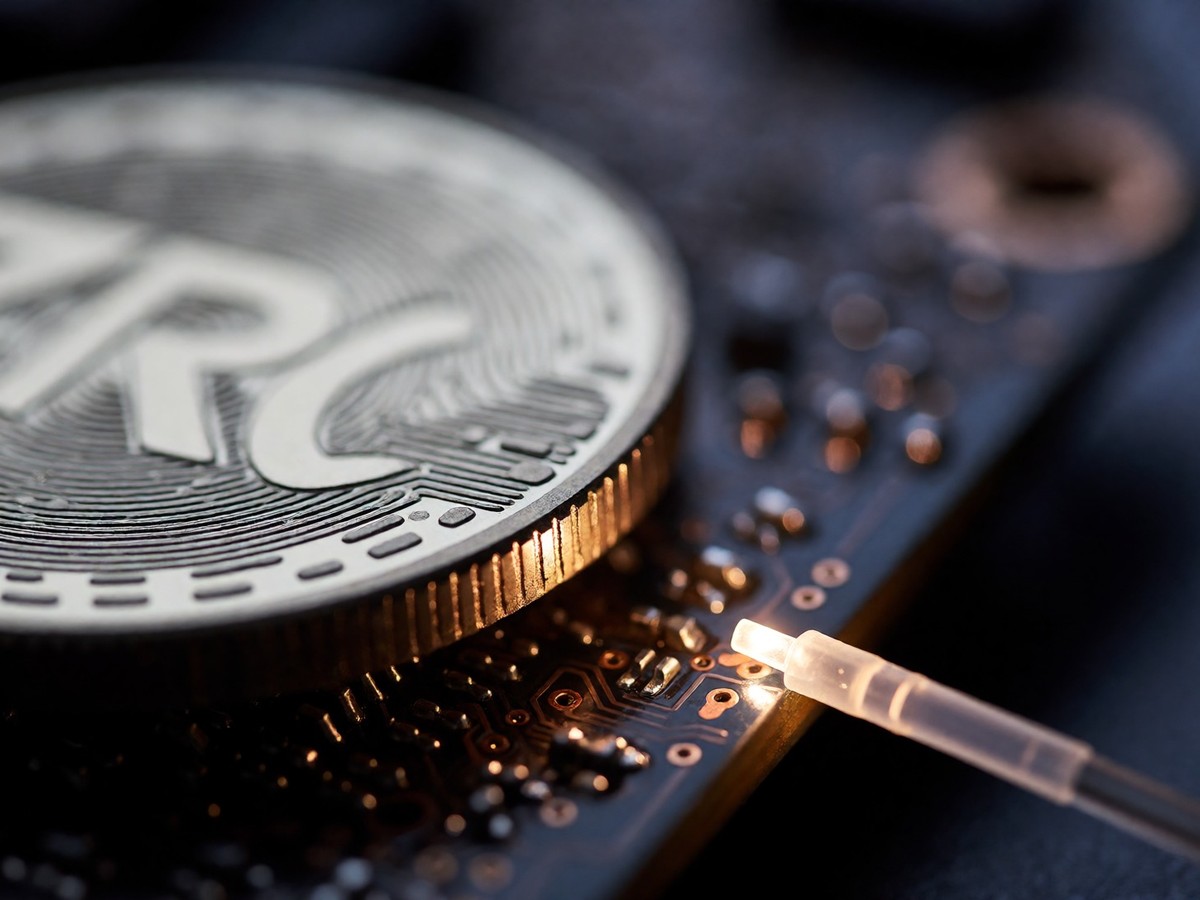
The Zero blockchain expansion
LayerZero announced the Zero blockchain on February 10, 2026, to address scalability and privacy needs. This architecture allows horizontal scaling to five million transactions per second by using multiple Atomicity Zones that handle two million transactions per second each. On August 25, 2026, LayerZero unveiled ATLAS, a headless exchange infrastructure built on the Zero blockchain that provides an initial capability of 200,000 transactions per second and sub-millisecond latency for institutional users. The tech stack includes QMDB for state storage, which processes 3 million updates per second, and FAFO, a parallel computation engine that enables 1.2 million EVM transactions per second. Additionally, Jolt Pro manages ZK proving while SVID handles networking. These components allow the network to process massive amounts of data efficiently. Transaction costs remain at approximately $0.0001 per transaction. Citadel Securities, DTCC, ICE, and Google Cloud act as institutional partners. Tether already runs its USDt0 stablecoin on this infrastructure.
Messaging framework comparison
LayerZero connects 165+ chains, such as Ethereum, Solana, BNB Chain, and Aptos, and facilitated over $225 billion in cumulative cross-chain volume. You already know how messaging works, so focus on the differences in verification models. The protocol uses a dual-verifier framework where applications choose their own Decentralized Verifier Networks (DVNs) and Executors. This modularity differs from the fixed committee approach used by Wormhole or the PoS validator hub used by Axelar. The Uniswap Foundation stated that LayerZero does not satisfy its requirements for cross-chain governance. The Ultra Light Node (ULN) architecture fetches block headers on-demand via a decentralized network of verifiers instead of syncing entire chains. The OFT standard enables the transfer of assets by burning the token on the source chain and minting a corresponding one on the destination chain to maintain a 1:1 ratio for all transferred assets. LayerZero maintains over 54,000 contracts using its communication protocol. While LayerZero provides flexibility, the limited number of Relayers creates a dependency on a small group of entities.
| Metric | LayerZero (v2) | Wormhole | Axelar Network |
|---|---|---|---|
| Verification Model | Configurable DVNs | Guardian Multisig | PoS Validator Chain |
| Trust Assumption | App-configured verifiers | Supermajority (13/19) | Economic security (AXL) |
| Primary Use-Case | DeFi routing | Institutional messaging | Programmable orchestration |
Institutional flows and ZRO utility
The integration with the Canton Network in March 2026 links LayerZero to an ecosystem processing $8 trillion in real-world assets monthly. This connection allows LayerZero to serve as a pipeline for large-scale institutional assets from companies like Goldman Sachs and JP Morgan. In March 2026, 100% of Stargate revenue flows to ZRO buybacks to return value to token holders. This mechanism creates deflationary pressure on the ZRO supply. On-chain data shows that nine wallets linked to Coinbase Prime accumulated $47.5 million in ZRO before a large unlock on March 20, 2026. Large institutions and allocation funds continue to accumulate ZRO at current levels.
LayerZero’s ZRO token has a total supply of 1 billion tokens. The foundation allocated 23.8% to the community and builders and 32.2% to strategic partners. The ZRO token provides governance control over the protocol fee switch. If the governance layer activates a fee of 10 bps, the annualized protocol revenue could exceed $125 million, which corresponds to a valuation of $2.5 billion or more. The token launch in June 2024 included an airdrop to 1.28 million eligible wallets. Will the activation of the Fee Switch drive a massive revaluation of the ZRO token?

Join the discussion