
Ethereum price drivers following the Pectra upgrade
Institutional capital influx from entities like Bitmine is driving ETH staking yields down to 2% or 3%. Vitalik Buterin's roadmap targets 1,000x gains in ZK-EVM execution and 500x growth in PeerDAS data capacity to scale the network.

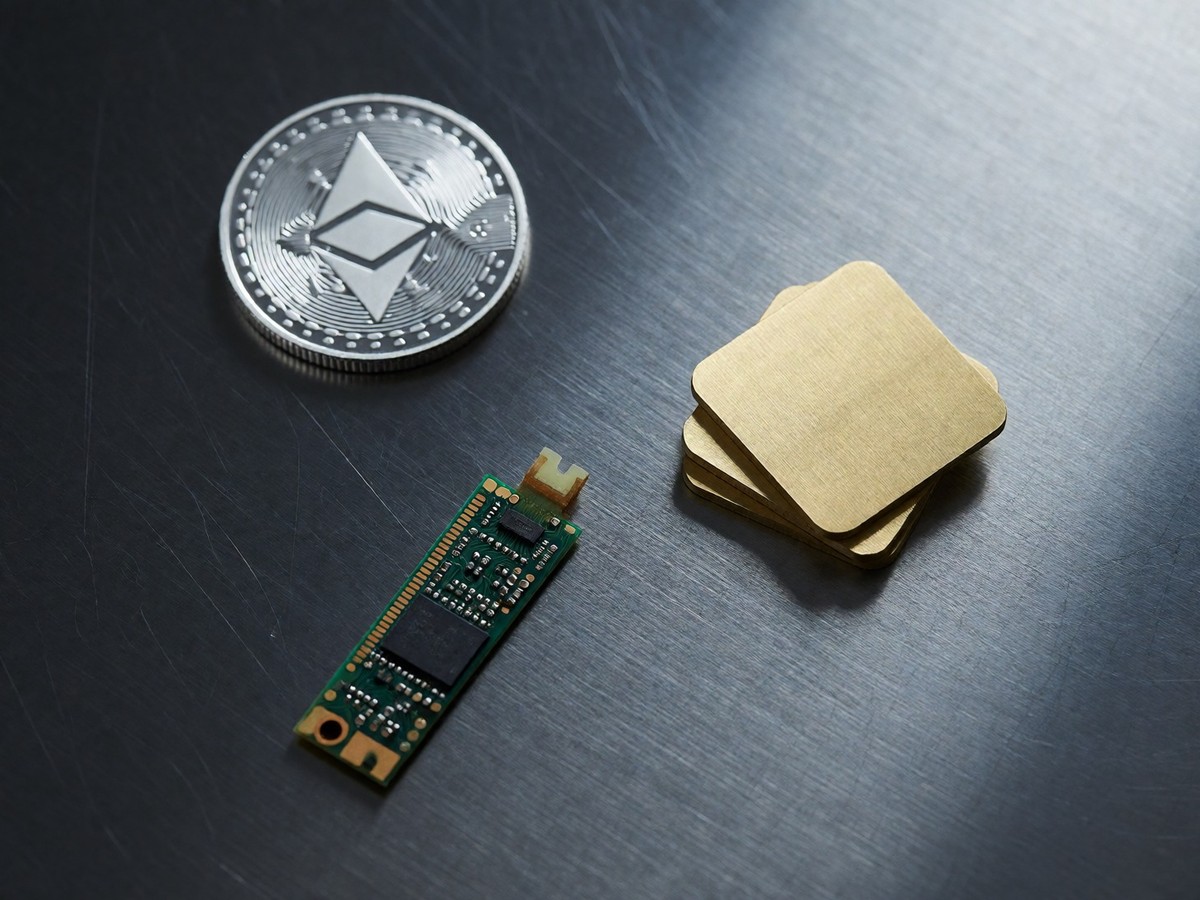
Institutional ETH accumulation and staking dilution
Bitmine purchased $145 million in ETH in March 2026. Tom Lee launched the MAVAN institutional staking platform. This influx of institutional capital forces ETH staking yields down to 2% or 3%. This dilution makes staking mathematically pointless for retail investors with less than $1 million in capital. While whales profit from volatility, small investors face rewards that fail to outpace inflation. Large funds acquire ETH to use it as an internet bond, while retail users face volatility that exceeds their meager rewards. Staking yields previously reached 5% to 7% before the concentration of assets in large validator sets. Small investors find 10% to 12% APY on stablecoin lending more attractive than ETH staking. In New Hampshire, HB302 enables the state treasurer to invest in digital assets with a market cap over $500 billion. Bitcoin remains the only digital asset meeting that market cap requirement. Arizona enacted HB2749 to allow the state to claim abandoned digital assets after three years of no electronic access. Arizona also passed HB2342, which prevents counties from prohibiting blockchain node operation in residences. Utah passed HB0230 on March 12 to establish a regulatory framework for digital assets. Kentucky passed HB701 on March 24 to provide protections for businesses using digital assets. Oregon passed SB167 to recognize digital assets as collateral for mortgage payments. You should watch how institutional inflows change the yield landscape.
Vitalik Buterin’s scaling and L2 interoperability
Vitalik Buterin’s February 2026 roadmap focuses on scaling execution, data, and status resources to increase network capacity. For data, PeerDAS and Blobs aim for 500x growth. For execution, ZK-EVM targets 1,000x gains. The plan includes EIP-3370 for address standards, EIP-7683 for communication between networks, and EIP-3668 for off-chain data access. The Ethereum roadmap incorporates EIP-7702 to allow wallets to function as smart contracts, which enables token-based gas payments, batching transactions, and social recovery without requiring users to manually deploy new contracts.
| Feature | Target / Limit |
|---|---|
| EIP-7251 Validator Cap | 2,048 ETH |
| EIP-8361 Staking Threshold | 60.25 million ETH |
| ZK-EVM Execution Gain | 1,000x |
| PeerDAS Data Growth | 500x |
Short-term execution gains of 10x to 30x come from Block Access Lists and ePBS. Data resources expect 10x to 20x growth through P2P improvements and multidimensional gas. VanEck predicts that the Ethereum L2 scaling network reaches a market cap of $1 trillion within six years. Vitalik Buterin expects all rollups to transition to ZK technology within five years. Because the current database is 100 GB, an expansion of 20x creates a 2 TB requirement. Downloading huge states requires massive bandwidth, which creates synchronization challenges for new nodes. Vitalik proposes temporary storage that expires and periodic storage with a one-year duration. Can the network maintain decentralization while shifting to these new state architectures?
EF grant allocation and EIP-8361 reward burns
The Ethereum Foundation distributed $32.65 million in Q1 2025 to over 90 projects. In 2025, the foundation also opened a $1 million academic research round. EIP-8361 proposes increasing the validator reward burn to 100% when staking reaches 60.25 million ETH. This proposal targets net issuance of zero once staking reaches the saturation point. Stani Kulechov from Aave Labs warns that zeroing rewards makes ETH borrowing strategies unviable.
The Pectra upgrade, which launched on May 7, 2025, increased the validator stake cap from 32 to 2,048 ETH. This change reduces network congestion and provides stakers with direct withdrawals from the execution layer. EIP-7691 and EIP-7623 double the blob count per block, targeting 6 blobs with a maximum of 9. EIP-2537 adds BLS12-381 precompiles to lower costs for staking and zero-knowledge applications. Oregon passed SB167 to recognize digital assets as collateral for mortgage payments. Arizona enacted HB2749 to allow the state to claim abandoned digital assets for its reserve. Arizona also passed HB2342, which prevents counties from prohibiting blockchain node operation in residences. The Ecosystem Support Program awarded $3 million to 105 projects in 2024.



Join the discussion