
Ethereum staking myths and facts after October 2026
Distributed validator technology and Lido's 0x02 module are transforming Ethereum staking by increasing capital efficiency. New developments allow validators to compound rewards up to 2,048 ETH while DVT clusters provide enhanced security through multi-node consensus.

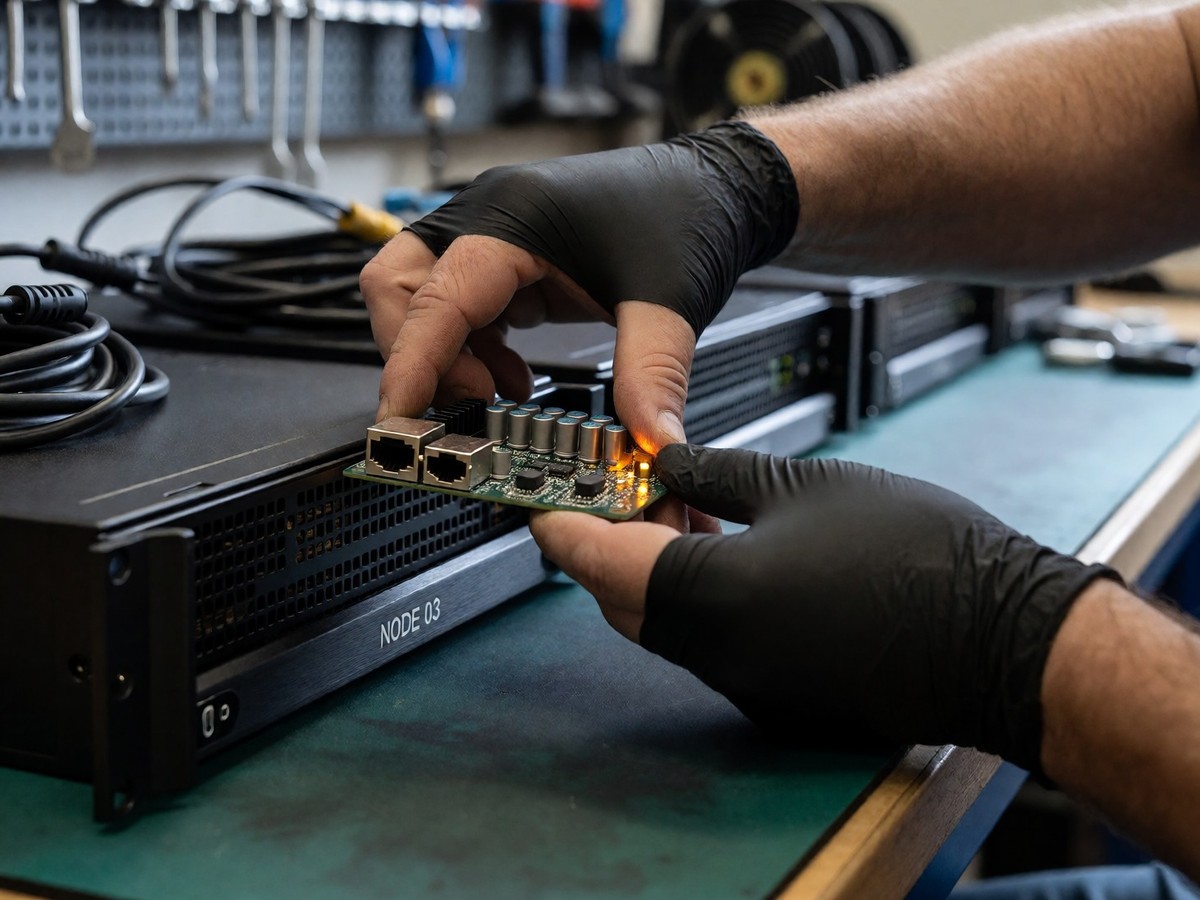
I find the belief that solo staking requires a single, isolated machine increasingly outdated. Distributed validator technology (DVT) splits private keys across multiple computers in a cluster to eliminate single points of failure. This software layer lets a group of four people run a single validator, where only three members must stay online to perform consensus duties. Obol develops the Charon client for this "squad staking" approach, while SSV Network provides a permissionless marketplace of professional node operators. Lido’s Community Staking Module (CSM) uses these tools to manage validators. Specifically, the Identified DVT Cluster (IDVTC) type allows independent stakers to achieve up to 3.1x capital efficiency compared to solo staking. One participant in an IDVTC can only belong to one cluster at a time. The cluster must consist of four independent participants who have approved ICS applications. These clusters use Obol or SSV to manage their duties. The Obol Charon client enables a cluster of four machines to operate a single validator, where only three members must stay online to perform consensus duties and prevent the validator from going offline. DVT uses Shamir’s secret sharing to split validator keys into component parts. Because BLS signatures are additive, partial signatures made with those key shares combine into a single signature that is valid for the full validator key. This means the full key itself is never needed for day-to-day signing. DVT minimizes slashing and downtime risks by using diverse hardware and software configurations across the nodes in a cluster. You already know that validator uptime is vital, but DVT adds a new layer of protection. I find that the shift toward these distributed clusters makes the network more resilient against hardware failure or software bugs.
The 32 ETH barrier
The limit of 32 ETH per validator no longer prevents large-scale capital consolidation. Lido’s 0x02 module targets an October 2026 mainnet deployment to allow validators to compound rewards up to 2,048 ETH. This expansion increases the maximum effective balance by 64 times relative to the current 32 ETH cap. The deposit process requires a 32 ETH initial bond and 30 ETH for every subsequent key. This new structure provides a 2.26x efficiency multiplier for users wanting to reduce validator sprawl. Lido keeps the 0x01 module to serve validators who prefer the simplicity of the 32 ETH model. By separating the 0x02 module, Lido can tailor bond parameters to specific needs. This separation avoids the hybrid compatibility issues that arise when trying to support different withdrawal credential types in one module. This upgrade will migrate more than 265,000 existing Curated Module validators from legacy 0x01 to 0x02. A validator using 0x02 can manage much larger holdings without the need for multiple individual validator setups. This change addresses the operational complexity that previously deterred larger holders. I think this upgrade is the best way to handle growing validator balances.
| Feature | 0x01 CSM | 0x02 CSM |
|---|---|---|
| Max Effective Balance | 32 ETH | 2,048 ETH |
| Subsequent Key Bond | N/A | 30 ETH |
| Capital Efficiency | 1.0x | 2.26x |
Institutional participation
The SEC and CFTC issued a joint interpretive release on March 17, 2026, which clarifies that staking rewards from decentralized proof-of-stake networks do not constitute securities. This decision allows institutions to engage in protocol-level validation without triggering the Howey Test. BlackRock launched the iShares Staked Ethereum Trust (ETHB) on March 12, 2026, and it attracted $254 million in assets during its first week. The Ethereum Foundation also demonstrated this capability by staking 72,000 ETH using a simplified DVT-lite system. Institutional participation remains a growing trend as more funds seek native yields. For example, the ETHB fund stakes between 70% and 95% of its holdings via Coinbase Prime and Figment. This fund maintains a 5% to 30% liquidity sleeve in unstaked ETH to handle redemptions. BlackRock and Coinbase retain 18% of gross staking rewards as a service fee. The March 2026 framework treats staking rewards as compensation for validation services. It applies to 16 designated digital commodities, including Ethereum. This allows validator software and infrastructure providers to operate without securities licensing. I notice that the current base rewards for validators sit between 3.5% and 4.2% APY. I wonder if the rise of regulated ETFs will eventually compress rewards for solo stakers.




Join the discussion