
DeFi liquidity volatility and the GMX V2 ecosystem
The October 10 market crash wiped out $19 billion in leveraged positions following a USDe depegging event. GMX V2 liquidity providers face risks from profitable traders in GM pools, while Solana's Firedancer client aims to scale throughput to 65,000 transactions per second.

The October 10 market crash, triggered by President Donald Trump’s announcement of 100% tariffs on Chinese imports, wiped out $19 billion in leveraged positions. The depegging of Binance’s synthetic stablecoin USDe to approximately 65 cents triggered widespread liquidations of leveraged positions, particularly those utilizing wrapped tokens like wBETH and bnSOL as collateral during the market mayhem. I find the sudden collapse of liquidity in synthetic assets particularly dangerous for decentralized market makers. On the GMX V2 protocol, liquidity providers deposit assets into GM pools to act as the counterparty for traders. These providers earn a share of trading and liquidation fees, but they bear the risk that highly profitable traders could deplete the pool they provide liquidity to. On the decentralized platform Hyperliquid, over 1,000 wallets lost everything, with total losses exceeding $1.23 billion. While Uniswap and Solana’s Jupiter aggregator captured millions in fees, the depegging of synthetic assets exposed vulnerabilities in pricing mechanisms and collateral valuation models. Binance announced a $283 million compensation plan to reimburse users affected by the crash. This plan aims to cover the difference between the liquidation price and the market price at midnight on October 11. The GMX V2 architecture replaced the single GLP pool used in V1 with market-specific GM pools. This transition allows liquidity providers to tailor exposure to specific assets. In the original V1 model, liquidity providers earned 70% of all fees on the chain. GMX V2 users access up to 100x leverage and benefit from automated rebalancing between underlying markets.
Solana’s Technical Progress and Firedancer
Jump Crypto’s development of the Firedancer validator client aims to increase Solana’s transaction throughput to 65,000 transactions per second. This upgrade introduces a second, independent validator client to improve network resilience and reduce latency. During recent testnet trials, the Firedancer client built its first accepted block, then successfully built three more blocks before it detected a mismatch against the rest of the cluster and performed a graceful shutdown. This error shows the complexity of scaling the network to meet institutional demands. Market participants view Firedancer as a long-term catalyst for the ecosystem, especially as Solana’s TVL reached $35 billion in 2025. Jump Crypto also initiated a $1 million bug bounty program targeting the Firedancer v0.1 client, nicknamed Frankendancer, to address potential vulnerabilities. If the network fails to maintain uptime during high-frequency trading, will the promise of Solana 2.0 hold? You should monitor if the successful delivery of this client reinforces confidence in the technical roadmap.
Bitcoin Mining Costs and Market Divergence
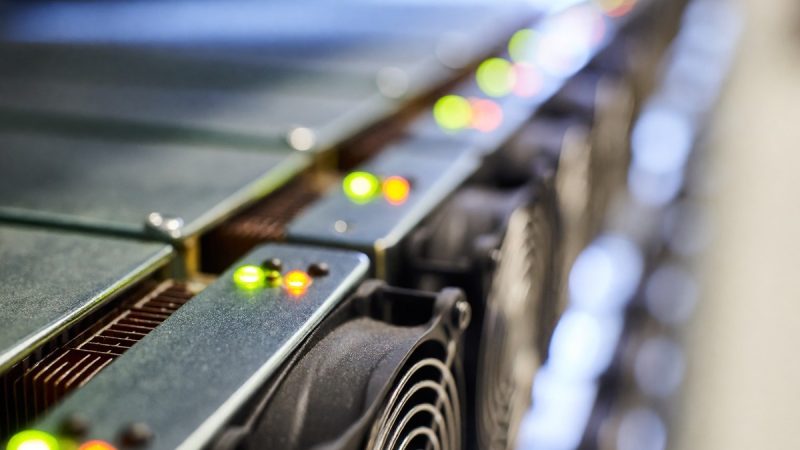
Bitcoin reached $125,500 as the "Uptober" rally continued through the second week of October. This price surge occurred even as the average cost to produce 1 BTC hit $114,842, a value that marks an all-time high for the network. High mining difficulty and the widening gap between market value and breakeven costs squeeze the profit margins of smaller operators. While mining firms like Riot Platforms manage cash flow through asset sales, others like Marathon Digital Holdings reported $123 million in profit for the third quarter of 2025. Marathon transferred 2,348 BTC, worth approximately $236 million, within 12 hours. This likely suggests profit-taking after the recent price rally. Several firms now move into digital infrastructure by combining Bitcoin mining with AI-driven high-performance computing. This strategic shift helps miners diversify revenue streams and reduce dependence on Bitcoin price volatility. Cango Inc. mined 602.6 BTC in October, while CleanSpark produced 612 BTC. The market for tokenized real-world assets on Solana reached $2.5 billion in May 2026.
Join the discussion