
How Tether’s gold-backed XAUT impacts Middle East institutional
New UAE regulations restricting foreign stablecoins like USDT drive institutional investors toward gold-backed assets. As the DDSC dirham stablecoin prepares for launch, XAUT has seen significant demand, with market capitalization exceeding $1.4 billion.

The UAE regulatory perimeter
The Central Bank of the UAE approved the UAE dirham-backed stablecoin DDSC for operational launch. This project follows an initiative first announced in April 2025 by IHC and FAB. DDSC is for institutional and government-led use cases, including high-value settlement, treasury operations, and trade and supply-chain flows. It operates on the ADI Chain, an institutional Layer-2 blockchain. The September 2026 deadline for Federal Decree-Law No. 6 of 2025 forces all DeFi protocols and Web3 platforms to reconcile their legal status with the Central Bank of the UAE’s new regulatory requirements. This law restricts the use of foreign stablecoins like USDT to the purchase of Virtual Assets or derivatives only. Merchants in the UAE cannot accept USDT for general commerce, salaries, or merchant payments. This restriction creates a distinct role for dirham-denominated tokens like DDSC and AE Coin. DDSC was developed through a collaboration between International Holding Company, First Abu Dhabi Bank, and Sirius International Holding. One reported institutional transaction on the ADI Chain involved AED 110 million.
XAUT performance and specifications
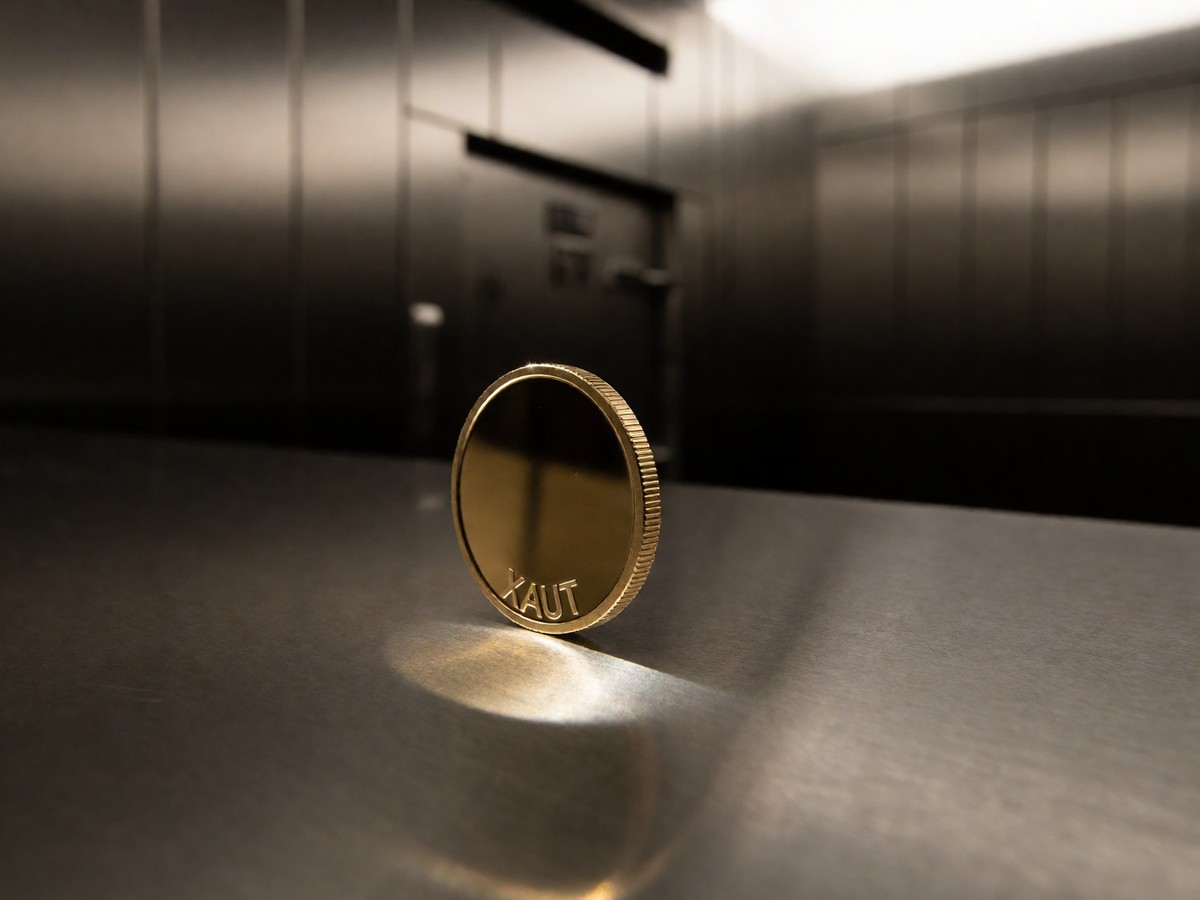
XAUT provides a liquid way for investors to hold gold on the blockchain. The market capitalization for XAUT exceeded $1.4 billion as demand for safe-haven assets grew. In October 2026, XAUT traded at approximately $3,746 with a 24-hour volume of $77 million. This performance follows gold prices hitting $5,100 per ounce in early 2026. Tether holds 116 tons of gold as of late 2025. XAUT is available on both Ethereum and TRON, which gives users more choice regarding network fees. While PAXG holds an NYDFS license, XAUT lacks an equivalent regulatory license from US authorities. This absence of NYDFS oversight makes some institutional allocators wary. PAXG provides monthly third-party audits, whereas XAUT uses quarterly attestations.
| Feature | XAUT (Tether Gold) | PAXG (Paxos Gold) |
|---|---|---|
| Blockchain | Ethereum and TRON | Ethereum only |
| Regulatory Oversight | No NYDFS license | NYDFS regulated |
| Backing | 1:1 physical gold | 1:1 physical gold |
| Minimum Investment | 0.000001 ounces | ~0.01 ounces |
XAUT is divisible to 0.000001 ounces. This divisibility allows for micro-transactions. The circulating supply of XAUT exceeds 375,000 tokens. Tether holds $8.7 billion in gold reserves in its Swiss vault.
Institutional redirection toward gold
The implementation of Federal Decree-Law No. 6 of 2025 forces all DeFi protocols and Web3 platforms to reconcile their legal status with the Central Bank of the UAE’s new regulatory requirements. Because the UAE restricts the use of foreign stablecoins for everyday business, institutions move toward assets like XAUT. These investors use XAUT to hedge against inflation and fiat volatility. XAUT provides a stable asset for DeFi because it links to physical gold in Swiss vaults. This market shift is driven by the need for stability in a fractured monetary environment. Gold prices rose 41% year-over-year because of geopolitical uncertainty and central bank purchases in China and India.
You might wonder how these shifts impact long-term treasury management for firms operating in Dubai. Will the rising popularity of gold-backed tokens eventually diminish the utility of traditional dirham-linked stablecoins in the region? Institutional allocators select XAUT because it is a functional, transferable reserve asset. It allows for 24/7 trading without the restrictions placed on foreign stablecoins in the UAE.



Join the discussion