
How Circle is shaping EU MiCA stablecoin regulatory strategy
Circle executives Patrick Hansen and Dante Disparte are advocating for a recognition regime and broader liquidity requirements to manage MiCA compliance. Compliant euro stablecoin market capitalization grew 128% to $673.9 million between June 2025 and June 2026.


Patrick Hansen, Circle’s Senior Director of E-U Strategy and Policy, directs the company’s response to the Markets in Crypto-Assets (MiCA) framework. He points out that only three of the top 50 stablecoins by market capitalization comply with MiCA: USDC, USDG, and EURC. Hansen proposes a "recognition regime" to help foreign-regulated stablecoins serve European users without requiring full local authorization. This strategy seeks to bring global stablecoin activity under European supervision rather than pushing it offshore. Dante Disparte, Circle’s Chief Strategy Officer and Global Head of Policy and Operations, also shapes the company’s regulatory stance. He advised the United Kingdom House of Lords that the UK should merge MiCA’s regulatory clarity and licensing with the US GENIUS Act’s governance models. He argued that a lack of a regulatory framework would keep stablecoin activity offshore and jeopardize London’s status as a financial innovation hub. You already know that regulatory divergence often drives liquidity to offshore platforms. Jeremy Allaire, Circle’s CEO and founder, views blockchain as the economic infrastructure for the future, specifically as an operating system for autonomous AI agents. His philosophy supports the development of programmable financial infrastructure that works alongside intelligent systems to drive transaction costs toward zero.
Stablecoin market stats
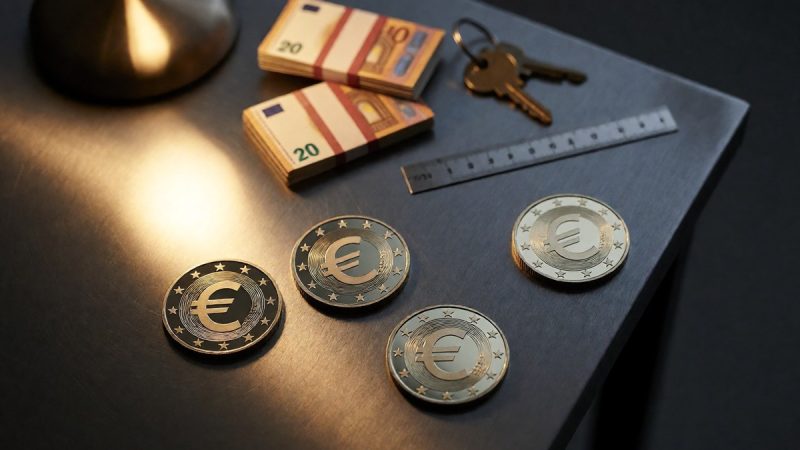
The MiCA transitional period ended on June 30, 2026, forcing a market reorganization. As of July 2026, 21 authorized issuers provide 35 regulated e-money tokens across 12 countries. Authorized jurisdictions include the Netherlands, Malta, Lithuania, Luxembourg, Finland, Denmark, Latvia, Czech Republic, Germany, Iceland, and Poland. France hosts six authorized issuers, including Circle Internet Financial European Union SAS, which issues USDC and EURC. The total market capitalization of the eight compliant euro stablecoins rose 128% between June 2025 and June 2026, moving from $295.6 million to $673.9 million.
| Stablecoin | Issuer | Average 2026 Market Cap |
|---|---|---|
| EURC | Circle | $430.4 million |
| EURCV | SG-Forge / Societe Generale | $137.8 million |
| EURI | Banking Circle | $51.1 million |
EURC maintained the highest average market capitalization at $430.4 million, though its share of total volume decreased as competitors grew. EURI reached $51.1 million in market capitalization within five months of its appearance in reports. Trading volume for the eight compliant tokens increased 43.1%, from $47.0 million to $67.3 million. Tether’s USDT remains unavailable on licensed European exchanges because the company did not submit the required electronic money issuance application.
Circle’s reserve and liquidity demands
Circle requests the European Commission to replace mandatory bank deposit thresholds with broader liquidity requirements. Current MiCA rules require e-money token issuers to hold 30% of reserves in bank deposits, a requirement that rises to 60% for significant issuers. Circle argues these fixed levels increase exposure to banking and counterparty risks. The company also requests the removal of a 35% limit on exposure to a single sovereign and a rule restricting deposits to the equivalent of 1.5% of a bank’s total assets. These constraints complicate reserve management for large issuers. Circle’s concerns follow the March 2023 Silicon Valley Bank collapse, which caused USDC to temporarily lose its dollar peg after $3.3 billion in reserves sat at the failed bank. Access to those funds returned only after US authorities protected depositors.
Circle also urges policymakers to allow EU-authorized entities to conduct joint stablecoin issuance with foreign-regulated counterparts. This ability helps prevent European users from using offshore providers that lack MiCA protections. Additionally, Circle recommends that the Commission adopt adaptive thresholds based on market uptake and liquidity conditions instead of using strict market capitalization limits. This would address the "chicken-and-egg scenario" that Circle claims stifles the growth of euro-denominated e-money tokens. Circle also requested the reform of the DLT Pilot Regime to include crypto-asset service providers in its cash account permissions. On March 20, Circle submitted feedback to the Commission regarding the Market Integration Package, which aims to strengthen European capital markets. This proposal includes lowering the barrier for institutions to engage with crypto-asset service providers. The upcoming regulation review targets improved competitiveness, stronger global regulatory coordination, and a recognition regime for foreign-regulated stablecoins. Will the Commission adopt the adaptive thresholds Circle recommends for market capitalization?



Join the discussion