
The new faces of CFTC crypto oversight
Michael Selig leads the CFTC following the departure of Rostin Behnam, focusing on fraud, market manipulation, and prediction markets. The agency's enforcement roadmap includes addressing $10 million Ponzi schemes and establishing rules for bitcoin perpetual contracts.

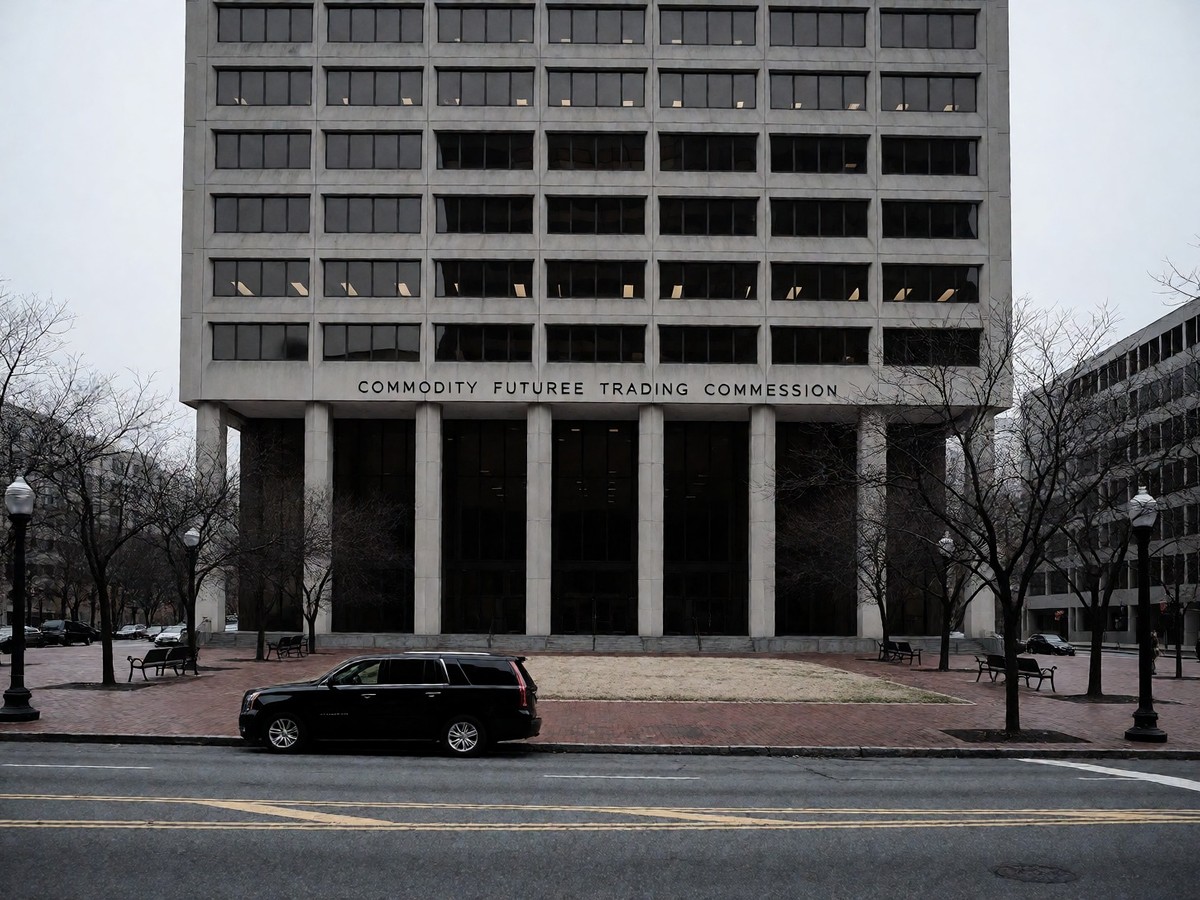
Leadership shifts and a single commissioner
Michael Selig leads the Commodity Futures Trading Commission after President Trump appointed him to replace Rostin Behnam. Selig, formerly the chief counsel for the SEC’s Crypto Task Force, currently sits as the agency’s lone commissioner. The commission awaits further appointments from the executive branch to fill seats that Summer Mersinger, Christy Goldsmith Romero, and Kristin Johnson left in early September. Caroline Pham, who directed the agency’s Crypto Sprint, plans to join MoonPay once Selig takes his role. I find the current staffing situation pathetic for an agency that handles massive regulatory expansion. The agency operates with a single commissioner while the Senate considers the nominations of four new commissioners to reach the required five. If the pending CLARITY Act fails to advance, Selig will direct staff to propose crypto market structure rules using the agency’s existing authority. Does the absence of a full commission hinder the speed of new crypto market structure rules?
| Enforcement Detail | Specific Fact |
|---|---|
| SimTradePro Restitution | Over $2 million |
| Wolf Capital Alleged Loss | $10 million |
| Narvett Restitution | Over $185,000 |
| Wells Response Window | 30 days |
Enforcement changes and the Crypto Sprint
Pham’s leadership shifted the enforcement focus by ending the practice of secret charges. She amended the Rules of Practice and Rules Relating to Investigations to require written Wells notices and objective explanatory memoranda for settlement recommendations. The Division of Enforcement must now provide an objective memorandum that contains a detailed explanation of the factual and legal foundation for recommendations and provides citations to evidence in the investigative record or stipulations by the parties as well as supporting legal points and authorities. These amendments also extend the time a defendant has to submit a written response to 30 days instead of the previous 14 days. The Division of Enforcement must also forward all Wells responses to the Commission regardless of whether a defendant requests it. Since Pham took charge, the agency moved away from technical errors to focus on fraud and market manipulation. On December 19, 2025, the CFTC filed a complaint against Wolf Capital Crypto Trading LLC for a $10 million Ponzi scheme. On December 18, 2025, the commission announced a consent order against an individual who misappropriated funds, which required over $185,000 in restitution. That individual received a 15-year prison sentence in May 2022 for wire fraud and money laundering. On December 9, 2025, the commission announced a consent order against SimTradePro Incorporated, which requires the defendants to pay over $2 million in restitution to 100 victims. You should watch how Selig maintains this focus on customer harm.
Product innovation and the roadmap ahead
Selig’s roadmap targets prediction markets and perpetual contracts. On May 29, 2026, the CFTC approved KalshiEX’s BTCPERP contract, which allows for the first U.S.-listed bitcoin perpetual contract. This decision aims to attract offshore trading volume back to domestic markets. Selig also directs staff to explore designating unregistered crypto exchanges as crypto asset markets under existing authority. He also directs staff to engage with developers of on-chain finance protocols to establish pathways for offering protocols in a legal manner in the United States. The agency’s Crypto Sprint includes listing spot crypto trading on designated contract markets, which the CFTC expects to be operational by the end of the year. Selig also seeks amendments to CFTC Rule 40.11 to define terms like "gaming" and to provide clarity on event contracts. The agency also works on the supervised use of tokenized collateral, and expects clearing implementation in 2026. For the AI agenda, Selig requested comments on compute markets to develop a regulatory framework for transparent markets for compute capacity. The roadmap for prediction markets also includes a proposed rule to modernize the reporting framework for fully collateralized event contracts and amendments to Parts 38 and 40 to institute consumer protection requirements that provide clearer expectations for product governance, market design and incentive programs.




Join the discussion