
The risks to Circle’s USDC reserve stability
Circle's USDC supply reached $72.9 billion in October 2026 as BlackRock's BSTBL fund targets stablecoin liquidity. Regulatory pressure on Paxos and PayPal's PYUSD highlights fragmentation risks and the impact of the GENIUS Act on reserve management.

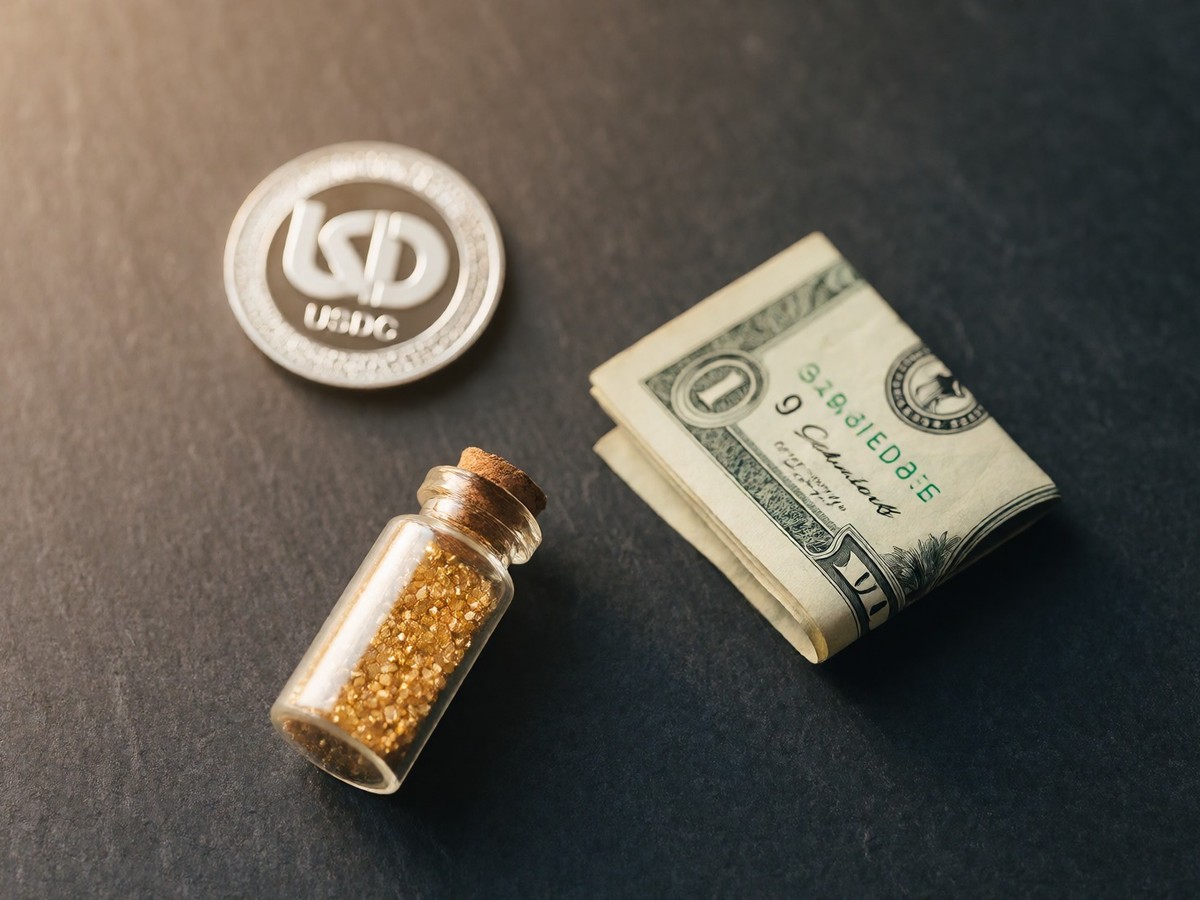
BlackRock’s yield strategy targets USDC liquidity
I recommend Circle’s USDC for European settlement because its French entity, Circle France SAS, holds the required EMI license under MiCA. The USDC circulating supply reached $72.9 billion on October 12, 2026. Circle holds most of its reserves in the BlackRock-managed Circle Reserve Fund, which is an SEC-registered 2a-7 government money market fund. The remaining cash is held at large global banks, such as BNY Mellon. BlackRock is building a direct competitor to the liquidity held in stablecoin reserves. In May 2026, the Senate Banking Committee moved forward with the Clarity Act, which bans passive yield on stablecoins held idle on crypto platforms. BlackRock’s BSTBL fund, which holds $6.1 billion in assets, targets the specific users who hold USDC because the Clarity Act passed in May 2026 to ban passive yield on stablecoins held idle on exchange accounts. These products move closer to the retail stablecoin user than the BUIDL fund, which has $2.5 billion in assets. The stability of these reserves is vital, especially after the March 2023 depeg event when $3.3 billion of Circle’s reserves, or 8% of the total, were stuck at Silicon Valley Bank. Circle follows the AICPA 2025 criteria to provide transparency on redeemable tokens and reserve composition.
| Asset | Issuer | Supply (Oct 2026) | Backing |
|---|---|---|---|
| USDC | Circle | $72.9B | Cash and US Treasuries |
| USDT | Tether | $183.5B | Treasuries, Gold, Bitcoin |
| PYUSD | Paxos | $2.9B | Cash and US Treasuries |
Regulatory pressure hits Paxos and PayPal
The SEC’s action against Paxos reveals the vulnerability of regulated issuers. Paxos received a Wells notice regarding BUSD, which the regulator claims is an unregistered security. The New York Department of Financial Services also ordered Paxos to stop minting BUSD because it cannot issue the token safely. This enforcement creates a precedent that threatens other issuers. PayPal’s PYUSD supply dropped to $2.7 billion in early August, a decline from the $4 billion recorded in March. PayPal now groups PYUSD with Braintree and merchant services in its new Payment Services & Crypto division. PayPal reported $486.4 billion in total payment volume for the second quarter of 2026. PayPal recorded $81 million in net losses for strategic investments and crypto assets during that same period. Binance previously admitted it did not always maintain fully-backed reserves for its version of BUSD, though it claimed the issue was in the past. You should remember that regulatory approval in one jurisdiction does not fix fragmentation elsewhere.
The bank consortium and the GENIUS Act
A group of 21 banks, including Goldman Sachs, Citi, Bank of America, Deutsche Bank, UBS, and MUFG, is building a USD stablecoin for a 2027 launch. This consortium is working within the GENIUS Act, which prevents payment stablecoin issuers from passing yield to holders. This ban forces capital into tokenized assets like BlackRock’s BSTBL or BRSRV, which requires a $3 million minimum investment. The total stablecoin market is approximately $303 billion, with Tether holding $183.5 billion and USDC holding $72.7 billion as of October 16, 2026. The GENIUS Act, which was signed into law in July 2025, establishes federal stablecoin licensing. This regulation places issuers with more than $10 billion in circulation under federal banking supervision. BlackRock’s BSTBL fund is the tokenized version of the Select Treasury Based Liquidity Fund, and it holds assets with a maximum maturity of 93 days. These funds aim to capture the interest that issuers earn on idle reserves. Will the bank consortium manage to capture the liquidity currently sitting in USDC?




Join the discussion