
Blockstream expands into Japan and addresses Liquid Network security
Blockstream expands into Japan with a new Tokyo office and a $75 million investment in Komainu. The company also manages a significant security incident where a software flaw in Elements allowed 4,000 BTC to leave Liquid Network federation reserves.

Blockstream, a firm co-founded by Adam Back, expands into Japan with a new Tokyo office. The company aims to accelerate Bitcoin Layer-2 adoption, self-custody solutions, and real-world asset (RWA) tokenization in the region. To strengthen its presence, Blockstream partners with Diamond Hands, Japan’s top Bitcoin consultancy, and investment firm Fulgur Ventures. Blockstream Capital, the firm’s investment arm, recently invested $75 million in Komainu, a crypto custody venture backed by Nomura, Ledger, and CoinShares. Blockstream plans to provide treasury, payment infrastructure, and custody solutions for local businesses looking to integrate Bitcoin into their financial operations through its new Tokyo office and recent partnerships with Diamond Hands and Fulgur Ventures. You already know Bitcoin’s institutional demand in Japan grows, following Metaplanet’s capital raise to acquire BTC. This expansion empowers enterprises and individuals with secure, scalable, and decentralized Bitcoin solutions. CEO Adam Back noted that increasing regulatory clarity and institutional demand make Japan a significant market for the firm’s technology. The expansion targets enterprises seeking to leverage Bitcoin for financial operations throughout the region.
Technical Research and Roadmap
The Q2 2026 report details research, post-quantum cryptography, hardware, sidechain development, and Lightning Network infrastructure. Blockstream Research proposed OP_CHECKSHRINCS, a new signature opcode based on a hash-based scheme, to handle post-quantum threats. This scheme could support up to 3 transactions per second with 580-byte signatures while relying on SHA-256.
| Feature | Specification |
|---|---|
| OP_CHECKSHRINCS throughput | 3 transactions per second |
| OP_CHECKSHRINCS signature size | 580-byte |
| Jade Classic price | $79 |
| Jade Core price | $99 |
| Jade Plus price | $149 |
| Liquid RWA tokenization volume | Over $5 billion |
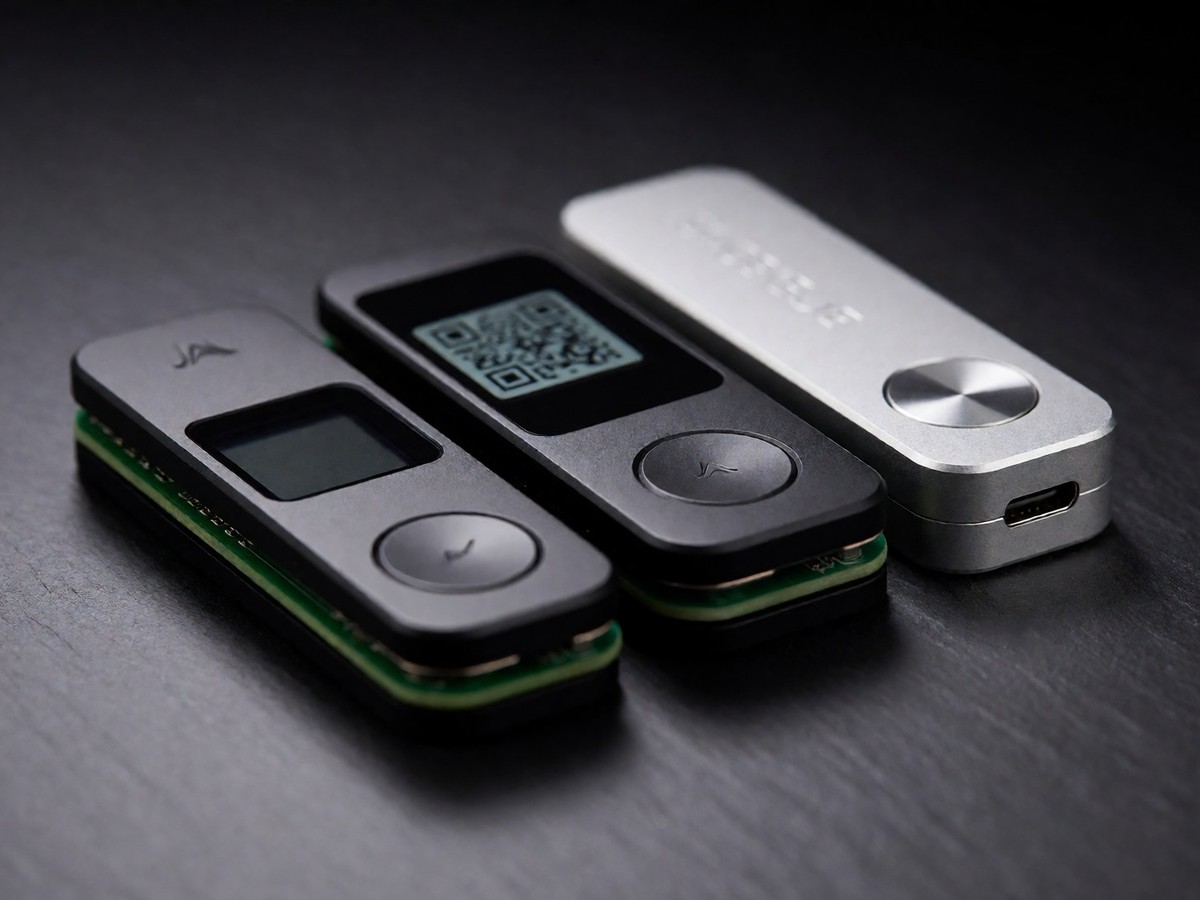
The Liquid sidechain roadmap includes 0-confirmation transactions, the removal of the asset issuance limit via ELIP 203, and a BitVM-style bridge. The Jade hardware wallet lineup includes Jade Classic for $79, Jade Core for $99, and Jade Plus for $149. These devices share open-source firmware and allow for two-factor authentication through offline OTP codes. Jade Core helps users moving assets from exchanges. The network facilitated over $5 billion in tokenized real-world assets. Lightning Network updates include versions 26.04 and 26.06, which graduated splicing from experimental status and introduced improvements like bwatch and expanded dispute windows. These updates also noted the departure of longtime contributor Rusty Russell after 11 years. Additionally, the company worked on updates to the AMP tokenization platform and documentation for the Liquid Wallet Kit. The Liquid sidechain also manages the AMP tokenization platform. The firm continues to engage with financial institutions, presenting its stack in various venues and preparing limited beta access.
Security Failures and the Liquid Incident
A software validation failure in Elements caused the Liquid Network to pause in September 2026. This flaw allowed 4,000 BTC, valued at $320 million, to leave federation reserves. SideSwap used its Peg-out Authorization Key to send 4,000 L-BTC to its service at 14:05 UTC. The federation paid 3,996 BTC to the customer’s Bitcoin address at 14:28 UTC. This withdrawal, which amounted to 95% of the reserves held by the network according to Reuters, exposed significant weaknesses in the software validation process used by the federation to manage its assets. Blockstream and federation members began investigating the flaw while Liquid disabled bridge nodes. The network disabled bridge nodes and told exchanges to pause Liquid Bitcoin deposits and withdrawals. On-chain messages from block 965,783 indicated the actor planned to repay after a network patch, yet the transfer remained unresolved. The actor’s message at block 965,875 asked Blockstream to patch every node before receiving the funds. This incident proves the federated security model fails to prevent large withdrawals when software bugs exist in the validation code. Can the federation regain trust after losing 95% of its reserves in a single transaction?


Join the discussion