
Marathon Digital’s wind farm pivot changes carbon accounting and ESG rules
Marathon Digital's $87.3 million acquisition of a Texas data center adjacent to a wind farm highlights how renewable energy integration affects Bitcoin mining carbon accounting. This shift occurs as the SEC proposes rescinding 2024 climate disclosure rules and ESG funds update exclusion criteria.

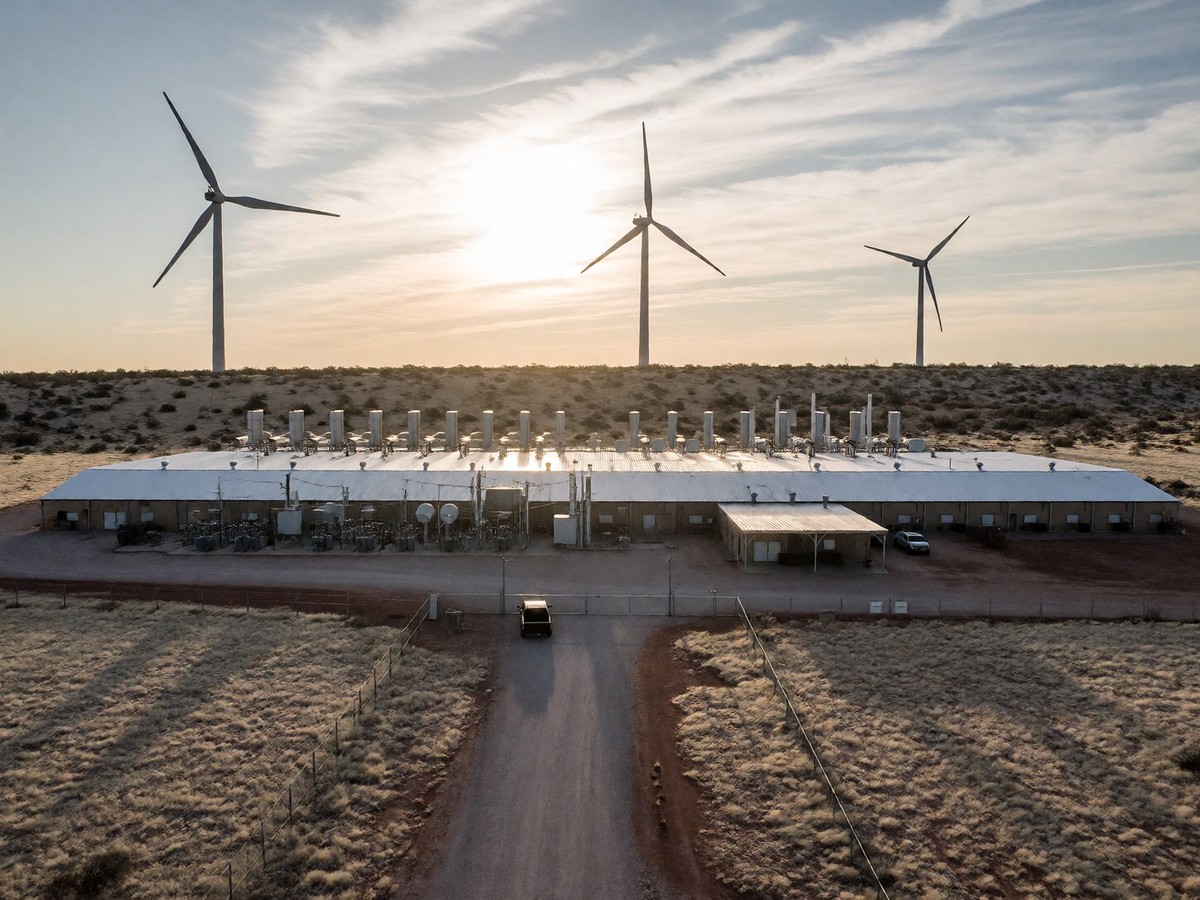
Marathon Digital Holdings acquired a 200-megawatt Bitcoin mining data center in Garden City, Texas, for $87.3 million, placing it adjacent to a wind farm. This site uses predominantly renewable energy and currently converts 100 megawatts of capacity into economic value. The company expects to expand this site in 2024 by an additional 100 megawatts to reach a total of 200 megawatts of capacity dedicated to Bitcoin mining. This acquisition brings Marathon’s Bitcoin mining portfolio to 1.1 gigawatts, where 54% of the capacity resides on sites the company owns and operates directly.
The shift toward renewable energy sources changes how analysts view mining operations. A February 2026 report from Paradigm notes that Bitcoin’s global energy use sits at about 0.23% and its carbon emissions at roughly 0.08% of the world total. This reflects a broader trend where miners seek the most affordable power, often finding it in renewable excess energy like wind or solar. In the Midwest and West Texas, wind power often blows strongest at night when demand stays low, allowing miners to purchase power at low rates.
| Facility Metric | Value |
|---|---|
| Garden City name plate capacity | 200 megawatts |
| Acquisition price | $87.3 million |
| Total mining portfolio capacity | 1.1 gigawatts |
| Directly owned/operated capacity | 54% |
I find the company’s move to own the energy source directly makes sense for their cost structure, but the reliance on specific geographic energy availability creates a narrow margin for error.
Regulatory shifts and ESG fund access
The SEC proposed to rescind its 2024 climate disclosure rules on May 29, 2026, which would eliminate requirements for public companies to provide detailed greenhouse gas emissions disclosures. This proposal seeks to return the agency to a more traditional, principles-based disclosure regime under federal securities laws. Even without a federal mandate, investor demand for climate disclosures persists. The SEC acknowledges that the International Sustainability Standards Board (ISSB) Standards offer a path for meeting investor demands through market-driven information flows.
Institutional investors also adjust their own rules. Xtrackers announced it would update the ESG exclusion criteria for its US Equity Enhanced Active and World Equity Enhanced Active UCITS ETFs, effective January 5, 2026. These funds will remove certain exclusion criteria related to nuclear and conventional weapons. However, the funds still exclude businesses exceeding revenue thresholds in thermal coal mining and power or unconventional oil and gas extraction. They also exclude companies identified by the Urgewald Global Coal Exit List as having involvement in coal power or mining expansion projects.
The SEC’s decision to move away from prescriptive climate rules ignores how much ESG-focused funds rely on standardized data to manage their portfolios.
Mining as a grid asset
Bitcoin mining functions as an interruptible load that can stabilize energy grids. Miners can power down when residential demand spikes, a process called demand response. They also act as a buyer of last resort when wind or solar farms produce more energy than the grid handles, preventing the waste of curtailed energy. This makes miners flexible grid assets rather than simple drains on the system.
Marathon’s pivot into high performance computing and AI infrastructure via agreements with Starwood Digital Ventures targets 1 gigawatt of near term IT capacity, with a path to more than 2.5 gigawatts. This expansion introduces execution risk because the strategy relies on large leases that have been slow to materialize. H.C. Wainwright downgraded the stock to Neutral from Buy and cut its FY26 sales forecast to $851.1m from $954.8m because of this risk.
| Metric | Data |
|---|---|
| Target IT capacity | 1 gigawatt |
| Potential IT capacity | 2.5 gigawatts |
| H.C. Wainwright FY26 forecast | $851.1m |
Will the pivot to AI infrastructure generate enough revenue to offset the volatility of Bitcoin mining?




Join the discussion