
Marathon records and endurance feats in 2026
Sabastian Sawe set a new men's marathon world record of 1:59:30 in London, highlighting Kenya's dominance in the sport. The data contrasts this speed milestone with endurance records like Christian Hottas's 2,500th marathon, showing distinct limits in athletic performance.

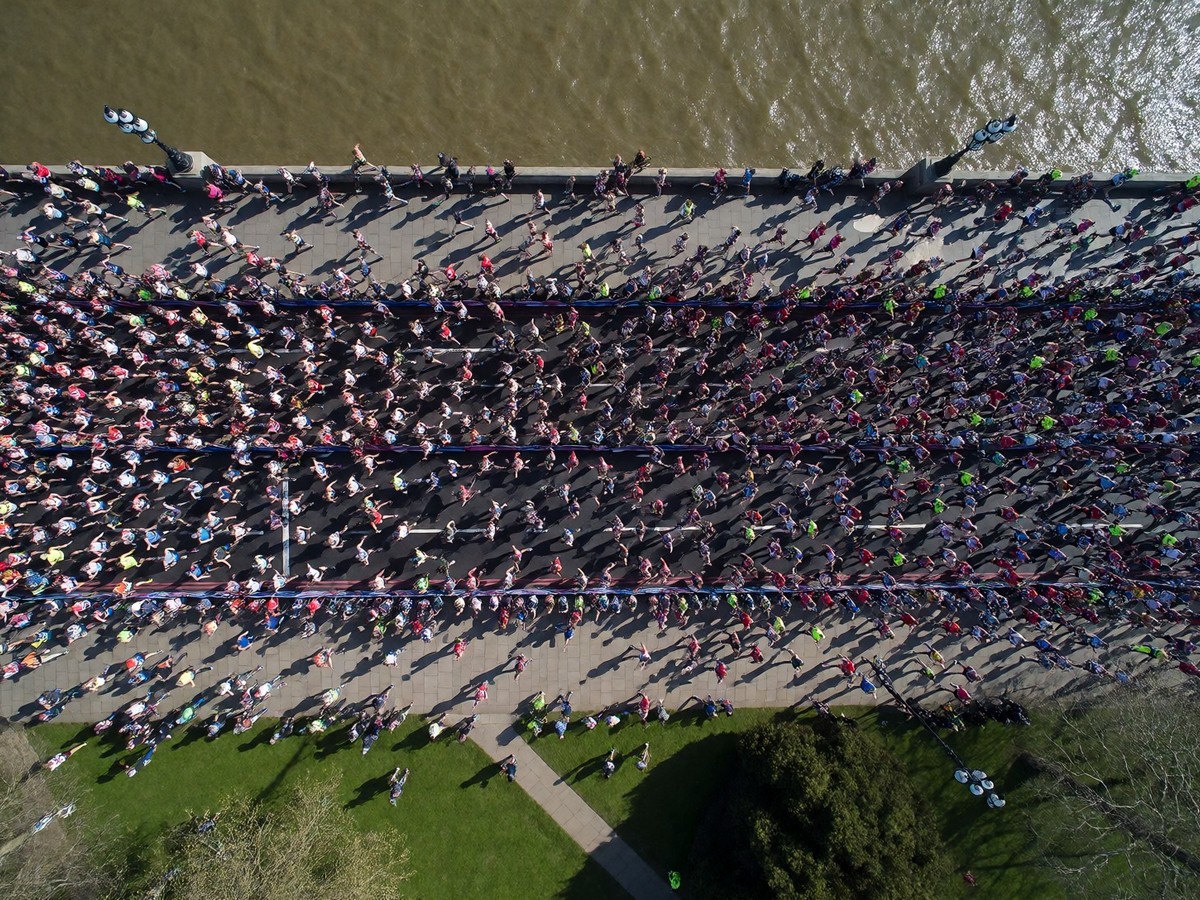
The current men’s marathon world record is 1:59:30, set by Sabastian Sawe of Kenya in London on April 26, 2026. This time breaks the previous barrier significantly, with Yomif Kejelcha finishing second at 1:59:41 and Jacob Kiplimo third at 2:00:28, all within a tight margin that underscores the elite depth in the sport. The women’s record remains at 2:09:56, held by Ruth Chepng’etich from Chicago in October 2024, which was the first time a woman broke the 2:10 barrier. These times are not just personal achievements but benchmarks for what is physically possible under World Athletics standards, which require specific course conditions for recognition.
Record breaking and regional dominance
Kenya dominates the recent top finishes, with three Kenyan or East African athletes occupying the top three spots in the latest London results. Sawe’s 1:59:30 is also the African record, a title he shares with the global mark. In contrast, the European record stands at 2:03:36, set by Bashir Abdi in 2021, showing a gap of over three minutes between the best in Africa and Europe. The North American record is 2:04:43, achieved by Conner Mantz in 2025, while Oceania’s best is 2:06:20 by Haftu Strintzos in 2026. These regional disparities highlight how altitude training and course selection influence performance, as flat courses near sea level typically produce the fastest times. I find it interesting that despite the technological advances in running shoes, the gap between the world leader and the continental records remains substantial, suggesting that human physiology still sets hard limits.
| Region | Men’s Record Time | Athlete | Year |
|---|---|---|---|
| World/Africa | 1:59:30 | Sabastian Sawe | 2026 |
| Europe | 2:03:36 | Bashir Abdi | 2021 |
| N. America | 2:04:43 | Conner Mantz | 2025 |
| Oceania | 2:06:20 | Haftu Strintzos | 2026 |
The consistency of sub-2:00 performances in 2026 marks a shift from the previous decade, where such times were rare. However, the women’s side shows less recent movement, with the record unchanged since 2024. Tigst Assefa’s 2026 time of 2:15:41 is the women’s Olympic record, but it does not approach the world standard. This stagnation raises questions about whether the next breakthrough will come from a new athlete or a change in pacing strategies. The data suggests that while men’s records are being pushed to the limit, women’s records may remain stable for another cycle.
Historical context and endurance feats
Beyond single-race records, the history of marathon running includes extreme endurance challenges that test human limits differently. Christian Hottas completed his 2,500th marathon on December 4, 2016, becoming the first person to reach that milestone. His feat took decades, illustrating the long-term commitment required for such volume. Similarly, Belgian Hilde Dosogne ran a marathon every day in 2024, covering 15,445 kilometers and suffering 15 falls along the way. Her achievement is a record for women, highlighting the physical toll of daily high-intensity exercise. These examples show that while speed records capture headlines, endurance records define the sport’s breadth.
The comparison between these two types of records reveals different aspects of athletic excellence. Sawe’s 1:59:30 requires peak power and efficiency over 26.2 miles, whereas Hottas’s 2,500 marathons demand resilience and recovery management over years. I would argue that the latter is more difficult to comprehend because it involves cumulative strain rather than a single burst of effort. The sources do not provide financial data for these runners, so any economic comparison is impossible. Instead, the focus remains on the physical metrics: time, distance, and frequency. The next question is whether we will see a man break the 1:59:00 barrier before the end of this decade, or if the current pace of improvement will slow down.




Join the discussion