
Monad vs Berachain: Comparing EVM Layer 1 architectures
Monad achieves 10,000 transactions per second through parallel execution, while Berachain's Proof-of-Liquidity model saw TVL drop from $3.3 billion to $180 million following its mainnet launch. Monad offers high throughput for developers, whereas Berachain faces liquidity volatility.

Monad’s Throughput and Architecture
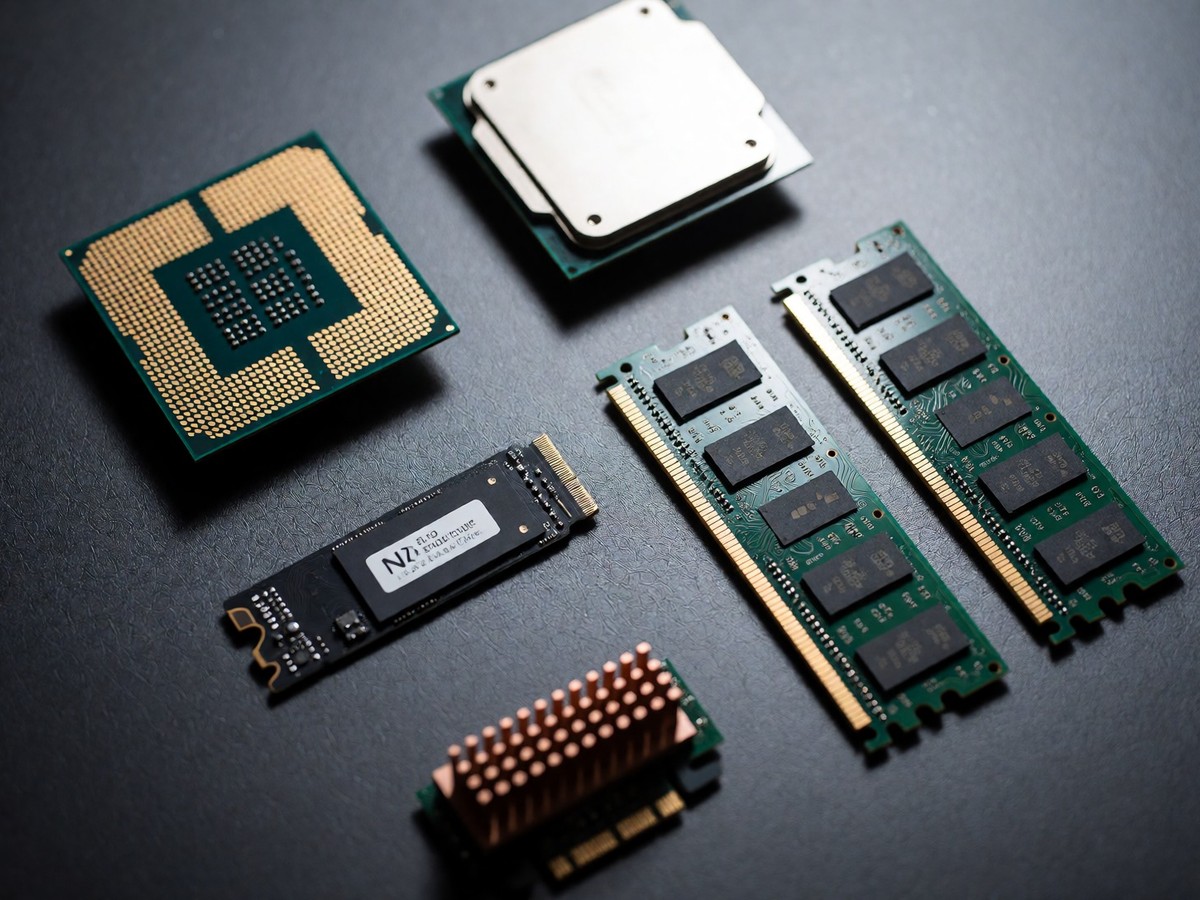
Monad delivers 10,000 transactions per second through its parallel execution architecture. This system uses optimistic concurrency control to process transactions simultaneously. When a conflict occurs, the network re-executes the affected transaction against a corrected state. Monad separates consensus and execution into parallel pipelines. This decoupling allows nodes to agree on transaction ordering before execution starts. Monad achieves deterministic finality in two consensus rounds, which takes about 600ms, and it reaches speculative finality in a single round at roughly 300ms through a pipelined BFT mechanism. Monad compiles frequently-used EVM bytecode to native machine code. This reduces execution overhead. The network runs on commodity hardware like 16-core CPUs, 64 GB RAM, and NVMe SSDs. This ensures that performance does not depend on specialized data centers. Monad also uses MonadDB, a custom Merkle-trie database, to handle state access, where the system reads and writes state directly on NVMe hardware to prevent storage bottlenecks. In most blockchains, validators must fully execute every transaction in a block before voting on it. Monad separates the two into parallel pipelines, so execution gets the full block time. This allows Monad to carry a large per-block gas capacity while holding 300ms block times. The network implemented MIP-12 to shorten that interval from 400ms. Monad weights opcode pricing across compute, state access, and bandwidth dimensions. This keeps the cost of an operation closer to the actual work it causes.
Berachain and the Liquidity Problem
Berachain uses a Proof-of-Liquidity consensus mechanism to connect validators, projects, and users. Validators distribute BGT emissions to reward vaults, which users access by depositing tokens. This mechanism aims to prevent the idle capital issues common in Proof-of-Stake systems. However, the Berachain ecosystem experienced significant volatility after its February 2025 mainnet launch. The total value locked fell from $3.3 billion to $180 million, while the BERA token price also dropped from $9 to $0.70 within one year. Large token unlocks and a heavy concentration of supply among venture capital investors contributed to these shifts. Private placement investors obtained 34.31% of the total supply. The complexity of the three-token model, which includes BERA, BGT, and HONEY, also deters some users. The departure of the chief developer, Alberto, in 2026 weakened technical capabilities. BGT is a non-transferable governance token. Users can burn BGT to obtain BERA tokens at a 1:1 ratio. Validators select which vaults to distribute BGT to based on discretionary strategies to maximize yield for their stakers. Applications can offer incentives to validators to encourage them to direct BGT rewards to them. These incentives, called bribes, come in the form of the protocol’s native token. This creates a unified market for incentives where projects compete to capture Berachain emissions.
The Comparison and Verdict
Monad is the better choice for developers who require high transaction density and existing Ethereum tooling. Its architecture handles the heavy lifting of state access by using MonadDB. The Monad execution engine uses non-blocking I/O to allow threads to process other transactions while state data loads in the background. You should focus on these hardware efficiencies if you build high-frequency trading apps.
| Feature | Monad | Berachain |
|---|---|---|
| Stated TPS | 10,000 | Not specified |
| Block Time | 300ms | Not specified |
| Consensus | MonadBFT | Proof-of-Liquidity |
| Token Model | MON | BERA, BGT, HONEY |
Monad uses an EIP-1559-compatible fee mechanism. The block gas target sits at 80% of the limit, and the base fee controller adjusts more slowly than Ethereum’s. This reduces sustained overpricing during ordinary demand. Monad also charges the gas limit set in a transaction rather than the gas used at execution. The Monad architecture relies on optimistic execution to maximize throughput. This method assumes most transactions do not conflict and processes them simultaneously, so if two transactions touch the same state, the system re-executes the later one. Which chain will maintain its users when the next massive token unlock arrives?


Join the discussion