
The physical structure and evolution of the scroll
Ancient scrolls and rotuli feature continuous rolls of papyrus or parchment that present unique preservation challenges. Modern researchers now use 3D X-ray scans and machine learning for virtual unfolding to recover text from fragile items like the burned En-Engdi Scroll.

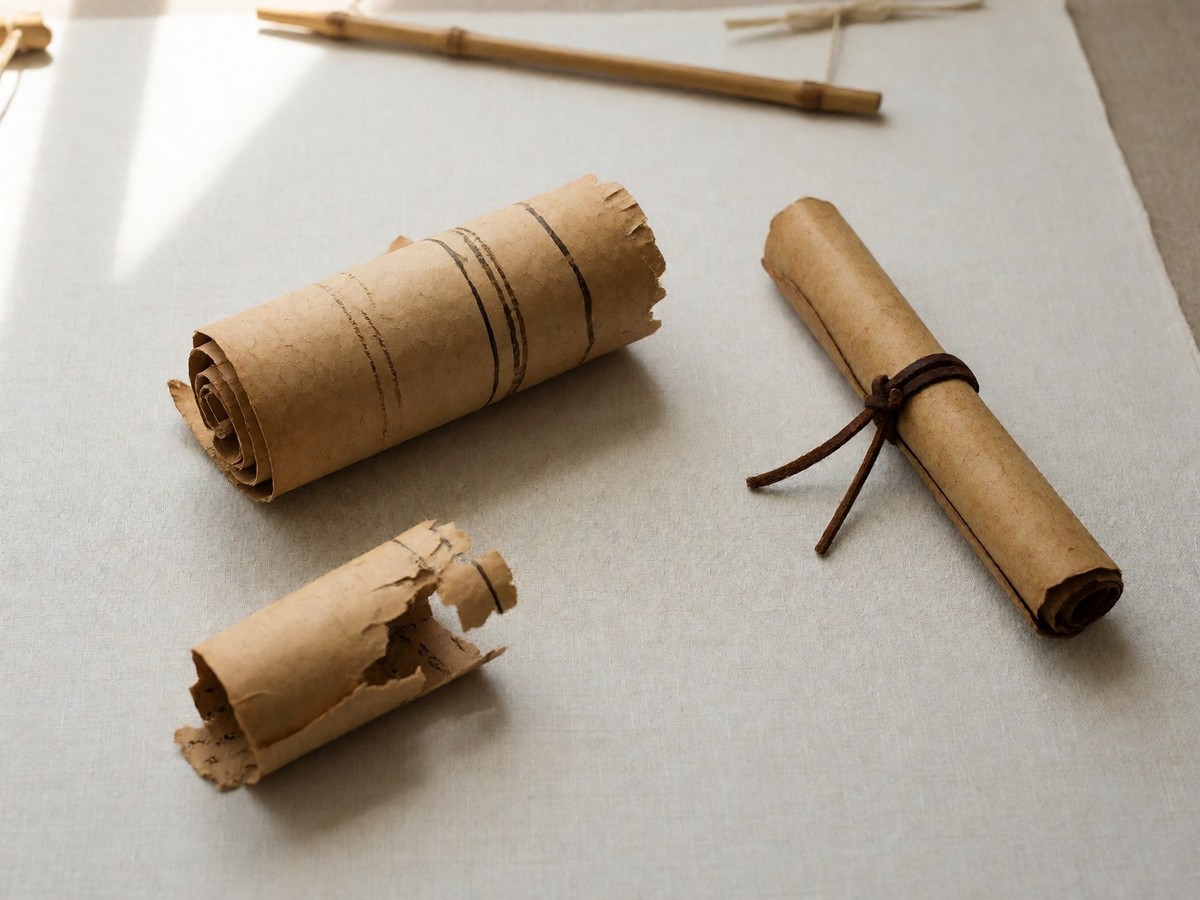
A scroll consists of a roll of papyrus, parchment, or paper. This format uses a roll that users unroll to expose one page at a time for reading or writing. Most scrolls include partitions into pages where separate sheets of papyrus or parchment glue together at the edges. Writers write in lines from the top to the bottom of the visible page. Depending on the language, the letters move from left to right, right to left, or in an alternating boustrophedon direction. You should understand how these physical changes impacted the longevity of the text. The ink used for writing must adhere to a surface that rolls and unrolls repeatedly. This constant movement causes ink to flake off the surface. Historians often use the term "roll" or "rotuli" to describe classical period writings. These rotuli feature writing lines that run across the width of the roll, which remains parallel with any unrolled portion, rather than along the length, divided into page-like sections. Rotuli can reach widths of 60 cm or two feet. These items often sat together in special cupboards on shelves.
| Format | Material | Characteristic |
|---|---|---|
| Scroll | Papyrus or Parchment | Continuous roll |
| Rotuli | Paper or Parchment | Width-wise writing |
| Codex | Bound sheets | Page-based |
The shift toward the codex format
Different cultures developed unique versions of the roll. The Chinese "whirlwind book" uses several pieces of paper bound at the top with bamboo and then rolled up. In Scotland, people used the term "scrow" from the 13th to the 17th centuries to describe writing or documents in list or schedule form. An office known as the Clerk of the Scrow, or Rotulorum Clericus, managed these documents. This office also functioned as the Clerk of the Rolls or Clerk of the Register. The codex form replaced the scroll during the Roman period. This change involved folding a scroll into pages to improve reading and handling. While some suggest Julius Caesar first folded scrolls in a concertina-fashion for his dispatches, historians doubt his role as the sole inventor. Christians used papyrus codices widely by the second century. The codex provides several benefits over the scroll. It fits on library shelves more conveniently and protects the surface from the physical stress of repeated bending. The word codex comes from the Latin "codex", which means a "block of wood". The words liber and buch also refer to wood, which serves as the root for library and book.
Most surviving parchment scrolls come from burial pits or the trash of forgotten communities. Because many people copied the contents of parchment scrolls into the codex format, the original scrolls were seldom preserved. Most people preferred the codex because it allowed the use of both sides of a page.
Modern recovery via virtual unfolding
Modern technology provides new ways to study ancient documents. Virtual unfolding offers a non-destructive method to read damaged or fragile scrolls. The process of virtual unfolding starts with a 3D X-ray scan in a tomograph, which scientists then programmatically unroll through machine learning methods to study the text in detail. This method allowed for the study of the burned En-Engdi Scroll from Israel and the Herculaneum papyri.
Researchers also used this technology to examine water-damaged Bressingham scrolls, the burned Diss Heywood scrolls from England, a Mongolian Buddhist scroll, a metal scroll from Jordan, and open unlettered documents from Europe. This method helps scholars see details on the surface that physical unrolling would destroy. It also assists in the analysis of bamboo scrolls from China. Does the accuracy of machine learning perfectly replicate the original layout of a destroyed scroll?


Join the discussion