
Wormhole ZK light client verification versus LayerZero security models
Wormhole utilizes AMD Alveo hardware to build an Ethereum ZK light client for secure cross-chain messaging. This security evolution follows a period of $8 billion monthly message volume and competes against LayerZero's decentralized oracle and relayer model.

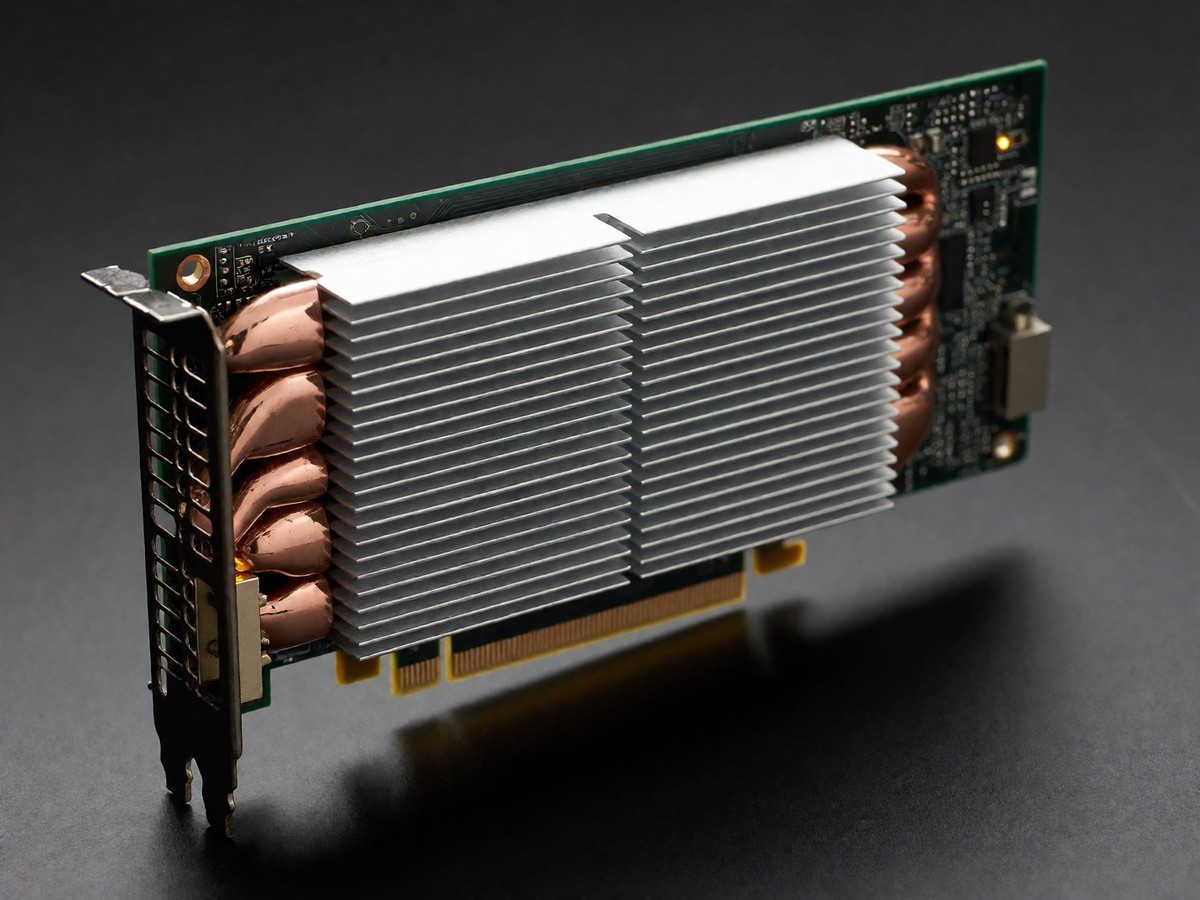
Wormhole hardware and ZK verification
Wormhole Foundation works with Succinct to build an Ethereum ZK light client to decentralize message verification. This project aims to minimize trust in the platform while improving cross-chain composability. The project uses AMD Alveo U55C and U250 chips to handle heavy compute tasks. These hardware upgrades facilitate secure communication channels between Ethereum, Solana, and Aptos. This move responds to the need for higher security after a 2022 incident involving a $320 million theft. Wormhole integrates AMD enterprise-grade FPGA hardware accelerators like the Alveo U55C and U250 to provide the substantial compute power required for generating and verifying zero-knowledge proofs across its network of over 30 blockchains. This integration follows a ZK roadmap to improve network security through ZK-based light clients.
Wormhole’s security model uses a 19/20 Guardian consensus. This consensus provides on-chain, time-stamped attestations for every message state. The Guardian stake is over $3.2 billion. You should note that these Guardian-signed state proofs provide a concrete foundation for recovery via governance votes. In addition, Injective supports Solana domain-name bridging with Wormhole on its mainnet. This allows users to purchase .sol domains and use both .sol and .inj domains across Injective dApps through two-way cross-chain interaction.
LayerZero security and Stargate competition
LayerZero prioritizes low-latency liveness through its decentralized oracle and relayer model. This approach results in a trade-off where recovery is more reliant on the economic security and active performance of its permissionless network of third-party executors. This shifts some operational risk and monitoring burden onto the application layer. LayerZero V2 allows developers to configure DVNs for send and receive operations by setting message libraries, enforced options, and peer addresses. Developers use OAppUlnConfigBcs.serialize() to configure DVNs for inbound messages. The average message cost for an ETH to Arbitrum transaction is between $0.10 and $0.40.
The competition for Stargate shows the tension between these two models. Stargate holds $345 million in total value locked and $92 million in treasury assets, primarily held in stablecoins and ETH. The protocol processed $4 billion in bridge volume in July 2025. LayerZero initially proposed a $110 million acquisition via a token swap. The Stargate community rejected this, leading LayerZero to offer a revised proposal including a six-month revenue-sharing model that gives 50% of revenue to staked STG holders. This revised proposal gained 88.6% community support. Wormhole counteroffered by arguing that the LayerZero proposal undervalues the Stargate brand and codebase.
| Feature | Wormhole | LayerZero |
|---|---|---|
| Primary Chains | 40+ | 70+ |
| Consensus | 19/20 Guardians | DVN and Executor |
| Max Slashable Stake | $3.2B+ | $250M+ |
| Optimistic Finality | ~15 min | ~3 min |
Infrastructure and market shifts
Google Cloud and Oracle partnered to allow customers to run Oracle database services within Google Cloud data centers. This partnership eliminates cross-cloud data transfer charges via the Oracle Interconnect for Google Cloud. Enterprises can procure Oracle database services, including Exadata Cloud Service and Oracle Autonomous Database, directly from the Google Marketplace. The partnership also allows businesses to use Google Cloud’s AI capabilities, such as Vertex AI and Gemini foundation models, alongside Oracle’s database prowess. Such infrastructure supports the increasing demand for cross-chain movement because bridge attacks caused $650 million in losses this year.
The market shows distinct preferences for these protocols. Wormhole’s ZK-based approach appeals to users prioritizing security and auditability for high-value transfers. LayerZero appeals to users needing gas efficiency and rapid deployment for high-frequency transactions. Will the hardware-heavy ZK approach eventually outpace the lean, low-latency DVN model? Lombard Finance moved $1 billion in Bitcoin assets, while KelpDAO moved $1.5 billion of rsETH following a $292 million exploit. Mantle migrated $2.5 billion of MNT to Chainlink’s Cross-Chain Interoperability Protocol. Kraken migrated $330 million of wrapped Bitcoin. Virtuals adopted the system for more than $700 million of VIRTUAL deployed across blockchain networks. Re shifted about $475 million of reUSD distribution.


Join the discussion