
Ethereum’s Pectra upgrade and the 2026 price equation
Ethereum's Pectra upgrade reduced daily ETH burn from 11.22 to 3.26 ETH as blob capacity increased. This shift in fee dynamics occurs alongside institutional ETF inflows averaging $180 million weekly and validator consolidation through EIP-7251.

The blob market and fee compression
The Pectra upgrade increased blob capacity to a target of 6 and a maximum of 9 per block through EIP-7691. This change reduced the scarcity of blobspace that rollups compete for, which drove blob fees toward the 1-wei floor. Since the Dencun upgrade, Layer 2 transaction fees dropped by 90% to 100 times compared to the old calldata method. However, this reduction in rollup data costs also lowers the total ETH burned from network activity. In the 60 days before Pectra, the daily burn averaged 11.22 ETH, but since the upgrade, it fell to 3.26 ETH. Current daily issuance sits at approximately 2,600 ETH against a gross burn of 1,240 ETH. This results in a net annualized inflation of 0.16%. Ethereum L1 hit 2.9 million daily transactions on June 8, 2026, which shattered the 1.7 million record from 2021. While 60% to 65% of this surge remains organic, address poisoning attacks increased 400% because fees dropped below $0.10. The Glamsterdam upgrade introduced parallel execution via EIP-7928, which allows the EVM to execute non-conflicting transactions simultaneously across multiple threads. This change provides a 3-4x throughput improvement without increasing block size. The Glamsterdam upgrade also allowed the gas limit to jump from 36M to 200M per block. Aave v4 and Morpho saw combined daily transaction volumes increase 140% since Glamsterdam. The 78% fee reduction reopened use cases like micropayments and AI agent settlement.
Staking efficiency and validator consolidation
EIP-7251 allows validators to increase their maximum effective balance from 32 ETH to 2048 ETH. This change enables compounding rewards within a single validator, which was impossible before. Large stakers now consolidate multiple 32 ETH nodes into single higher-balance validators to reduce network congestion and management complexity. This consolidation helps manage the 32.4% staking ratio, which is 39 million ETH worth over $100 billion. EIP-6110 moves validator deposits to the execution layer, reducing processing time from 12 hours to 13 minutes. EIP-7002 allows stakers to trigger withdrawals using withdrawal credentials, which removes the dependency on active keys for exits. EIP-7702 allows externally owned accounts to behave like smart contracts for a single transaction.
| Parameter | Post-Pectra Value |
|---|---|
| Max Validator Balance | 2048 ETH |
| Min Staking Requirement | 32 ETH |
| Deposit Processing Time | 13 minutes |
| Staking Reward Yield | ~3.2% APR |
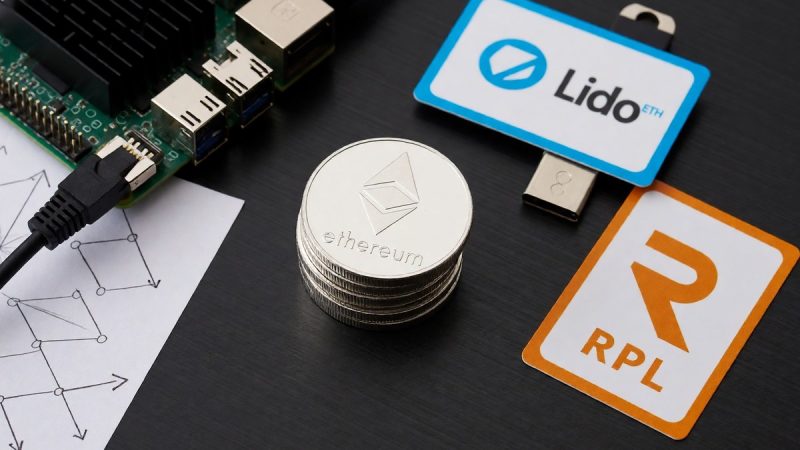
Lido remains the dominant liquid staking provider with 28% market share, followed by Coinbase cbETH at 14% and EigenLayer restaking derivatives at 11%. The 32.4% staking ratio combined with 18 million ETH in DeFi protocols removes more than half of all Ethereum from liquid markets. You should monitor how this consolidation affects decentralization.
Institutional demand and the L2 gap
BlackRock’s ETHA and Fidelity’s FETH drive demand as institutional investors reallocate to lower-cost vehicles. BlackRock’s ETHA has accumulated $11.4 billion in net inflows since its launch. While rollups handle 95% of transaction activity, they still rely on Ethereum for security and settlement. This relationship makes ETH a bet on rollup demand persistence, even though L2 transaction volumes increased 22% since Glamsterdam. BlackRock’s BUIDL and Franklin Templeton’s BENJI continue to migrate onto Ethereum L1 because fees now support frequent rebalancing. Weekly ETF inflows averaged $180 million in the month following the upgrade, up from $95 million in the prior quarter. L1 recaptured the medium-value transaction tier for DeFi operations between $50 and $500. Will L2 growth eventually increase demand for Ethereum data availability, security, collateral, and settlement?


Join the discussion