
Lido versus Rocket Pool: Post-Pectra staking realities
Ethereum staking dynamics shift as EIP-7251 allows validator consolidation up to 2,048 ETH. Lido maintains a $34B TVL through professional operators, while Rocket Pool offers decentralization via 2,000 independent nodes and an 8 ETH minimum bond.

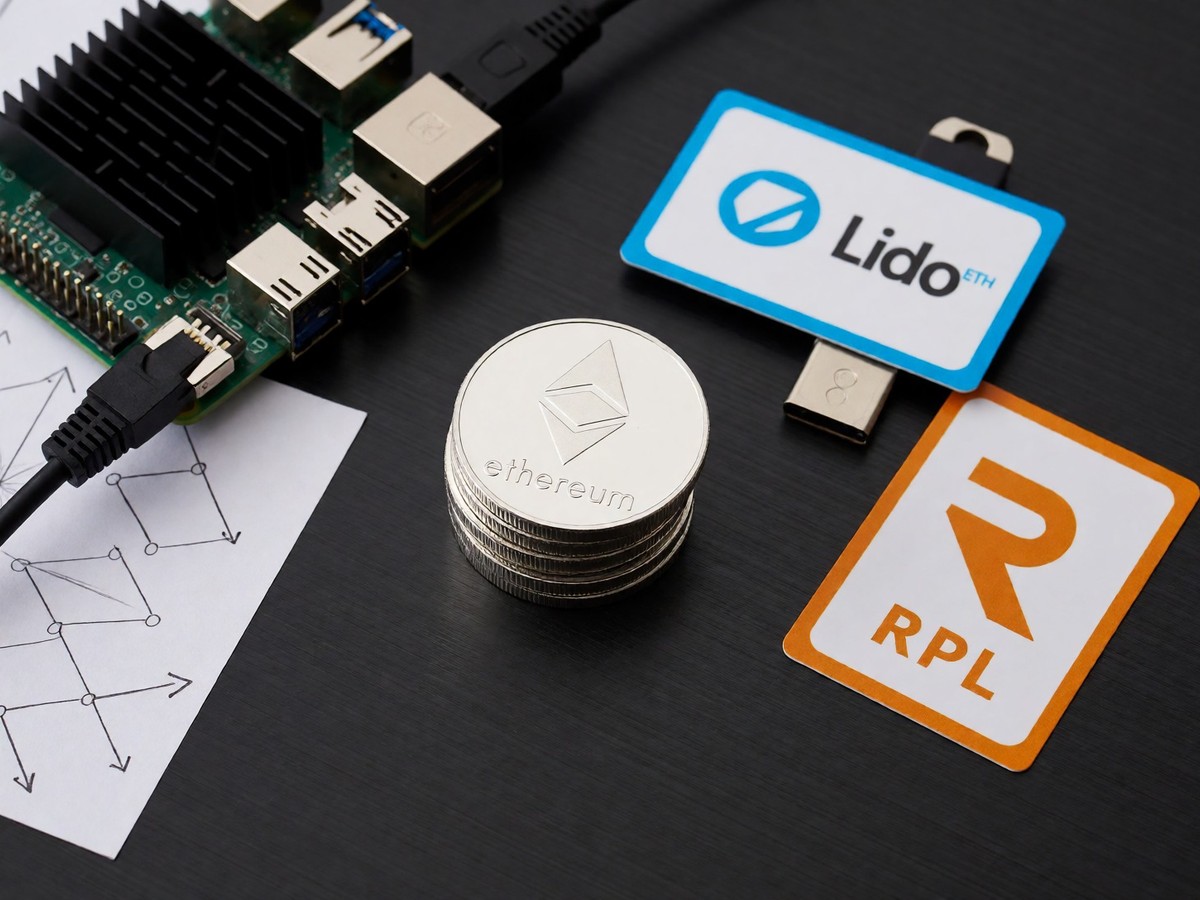
Validator consolidation and withdrawal mechanics
Pectra’s EIP-7251 raised the maximum effective validator balance from 32 ETH to 2,048 ETH on May 7, 2025. This change lets operators consolidate many small validators into fewer large ones. EIP-6110 reduced the time between a deposit and activation from 12 hours to about 13 minutes, which makes validator activation much faster than the previous process. For those using the 0x02 validator prefix, consensus-layer rewards compound automatically on the validator. If you prefer the old 0x01 format, you must manually skim rewards to trigger a gas cost. EIP-7002 enables execution-layer triggerable withdrawals. These partial withdrawals enter a queue where the network processes a maximum of 8 requests per block. Once deducted from the validator, the balance must stay above 32 ETH for the withdrawal to succeed. A 0x02 validator with 32 ETH must wait about 400 days to receive 1 ETH of rewards to benefit from the compound effect. Consolidation requests move from the execution layer to a special smart-contract subject to a fee mechanism. These requests are stored in a queue on the consensus side. The maximum throughput for consolidation requests is approximately 7,200 per day across the network. Will this queue capacity sufficiently handle massive withdrawal events?
Liquidity depth versus network decentralization
Lido holds over $34B in total value locked, while Rocket Pool holds approximately $4B. Lido uses a permissioned set of about 30 professional node operators to maintain its 31.9% market share. Rocket Pool uses a permissionless network of over 2,000 independent operators. Rocket Pool requires a minimum 8 ETH bond for minipools. Lido stakers access stETH, which remains the standard for DeFi with deep liquidity in protocols like Aave and Curve. Listen, the liquidity gap between these two protocols dictates your choice for large capital moves.
| Metric | Lido | Rocket Pool |
|---|---|---|
| Total Value Locked (TVL) | $34B+ | $4B+ |
| Node Operator Set Size | ~30 professional | 2,000+ independent |
| Minimum Stake (ETH) | 32 ETH | 8 ETH |
| Effective Staking APR | ~3.2% | ~3.4% |
Lido provides high liquidity for large capital allocations because its scale produces low slippage. Rocket Pool prioritizes censorship resistance through its decentralized model. Rocket Pool node operators can use RPL to reduce their bond requirements, and the protocol uses RPL buy and burn to capture surplus value. Rocket Pool’s 8 ETH minipool design allows anyone with 16 ETH to run a node. Lido’s scale produces low slippage for large capital, while Rocket Pool provides a decentralized alternative.
Restaking risks and slashing penalties
EigenLayer holds $7.1B as of October 2, 2026. Restaking adds a layer of risk because the same asset secures Ethereum and additional third-party services called AVSs. AVSs define their own slashing conditions, and users cannot assume uniform rules across the protocol. Slashing went live on the mainnet on April 17, 2025. The reduction in slashing penalties from 1/32 of the balance to 1/4,096 of the effective balance aims to convince validators to consolidate their individual stakes into much larger 2,048 ETH pools. This reduction mitigates the impact of an isolated slashing event on a 2,048 ETH validator. However, restaking still creates correlation risk where one operator fault hits stake pledged across multiple services. Users face smart contract risk across the Ethereum staking layer, the LST, EigenLayer, the LRT wrapper, and the AVS contracts. EigenLayer restakers also face operator risk, where a weak operator might suffer downtime or misconfiguration. EigenLayer also exposes users to governance risk, where a compromised governance process could change rules in damaging ways. LRT liquidity can reprice in stress with a thinner market. One such risk includes the possibility that AVSs set their own conditions which increase exposure to potential failures. Users must evaluate if the variable service premium from AVS rewards covers the expanded risk surface.



Join the discussion