
The technical necessity of Scroll’s prover evolution
Scroll developers reduced ZK proving cycles by 50% through the Galileo upgrade to improve performance. This technical evolution aims to manage prover hardware load and prepare for a transition toward decentralized mining and private AI interactions by 2027.

Engineering the prover
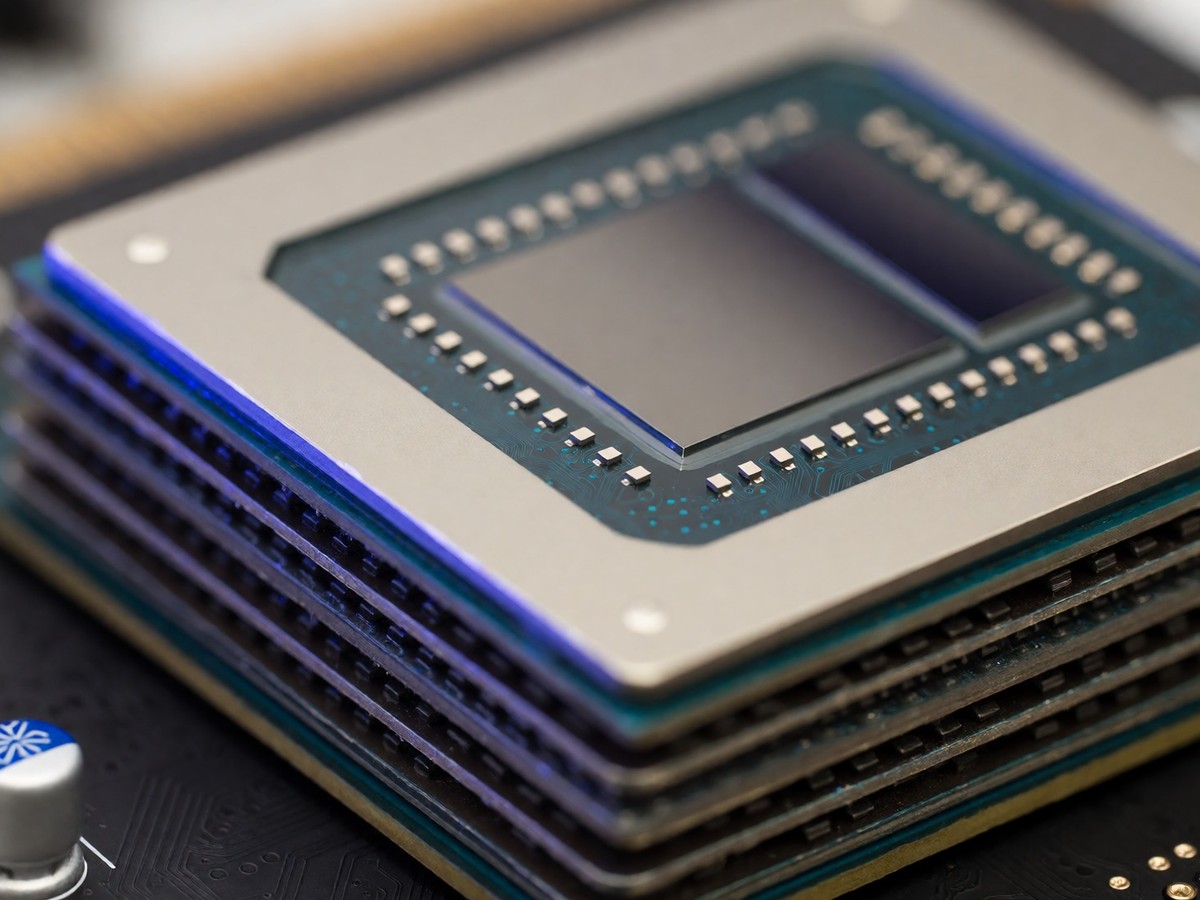
Scroll developers reduce ZK proving cycles by 50% through the Galileo upgrade. This update uses a memoization mechanism to replace on-the-fly Merkle path recalculation with a deterministic caching system. The addition of the CLZ opcode ensures compatibility with Solidity version 0.8.31. The engineering team works to improve Prover performance while maintaining compatibility with Ethereum opcodes. The MODEXP precompile also received gas formula adjustments to prevent prover killer spikes when calculating large exponents. I find the move toward a more performant client, specifically the migration from l2-geth to l2-reth, a logical response to the need for lightweight node operations. Even with these optimizations, ZK overhead remains high, as generating a proof can cost 100 to 1000 times the original calculation. The team spent over $1,000,000 on audits from firms like Trail of Bits and Zellic to address these complexities. Because the team writes custom circuits for the EVM, they face much higher engineering difficulty than projects using a zkVM with a custom instruction set. Prover efficiency has jumped 5 to 10 times over the last two years. Developers can now participate in ETHGlobal contests with prize pools of $10,000 or $2,500. My verdict is that the technical progression focuses on managing prover hardware load and keeping transaction costs low.
Multi prover security and the mining question
The Multi Prover design uses different types of provers to verify the same L2 block, which helps ensure that if one prover contains a bug that allows a hacker to steal funds, the other two provers can still produce valid proofs to confirm the state. This setup requires two out of three proofs to pass for the Ethereum mainnet to accept the Layer 2 state. You should understand that this redundancy increases the overall execution cost for the network. This concept follows a proposal by Vitalik at the Bogota event to use different types of provers, such as TEE-based provers using SGX, alongside other methods. Scroll currently operates a centralized Prover Market to ensure stability, but the team plans to open this to GPU holders and miners through an incentive-based decentralized network to encourage widespread participation. They also collaborate with hardware companies like Cysic on GPU acceleration to achieve 5 to 10 times faster proof generation than CPUs. The project builds a prover generation network that functions like a ZK mining pool to incentivize participation. The team works to make the ZK framework more general to attract more developers to build on it. If they launch this decentralized mining model, how will they prevent the fastest miner from always winning?
The economic reality of the AI pivot
Scroll announced a transition to a permissioned, application-specific network for private AI interactions on October 30, 2026. This overhaul targets a Q2 2027 migration where the project moves the SCR and USX tokens to the Ethereum mainnet. Current data shows Scroll’s on-chain net profit reached only $42.50, a 92% decline over the past year. This economic pressure drives the shift toward new demand via AI products like Compass, CENO, and USX. The shift to a permissioned model replaces the open participation model with restricted node operators to facilitate private AI payments and verifiable rules. As of October 30, 2026, the protocol held $7.36 million in DeFi and $42.44 million in bridged total value locked. The SCR token facilitates fee payments and decentralized governance, though the migration allows it to act as staked collateral for model verifiers on the Ethereum mainnet. The new fee structure in the Galileo upgrade uses a quadratic penalty for large transactions to mitigate spam attacks. The formula divides fees into a base term for compressed size and a penalty term for large transactions, while the commit_scalar covers L1 commit and execution costs and the blob_scalar covers blob costs.
| Metric | Value |
|---|---|
| Galileo Prover Optimization | 50% reduction in ZK cycles |
| Current Net Profit | $42.50 |
| Net Profit Decline | 92% |
| AI Transition Target | Q2 2027 |
| Ethereum Bridge Assets | $42.44 million |

Join the discussion