
Solana vs Ethereum: comparing architecture, speed, and economics
Solana offers 3,000 to 5,000 sustained transactions per second with 400ms block times, while Ethereum L1 processes 15 to 30 transactions per second. The comparison highlights differences in monolithic versus modular architectures and developer ecosystems.

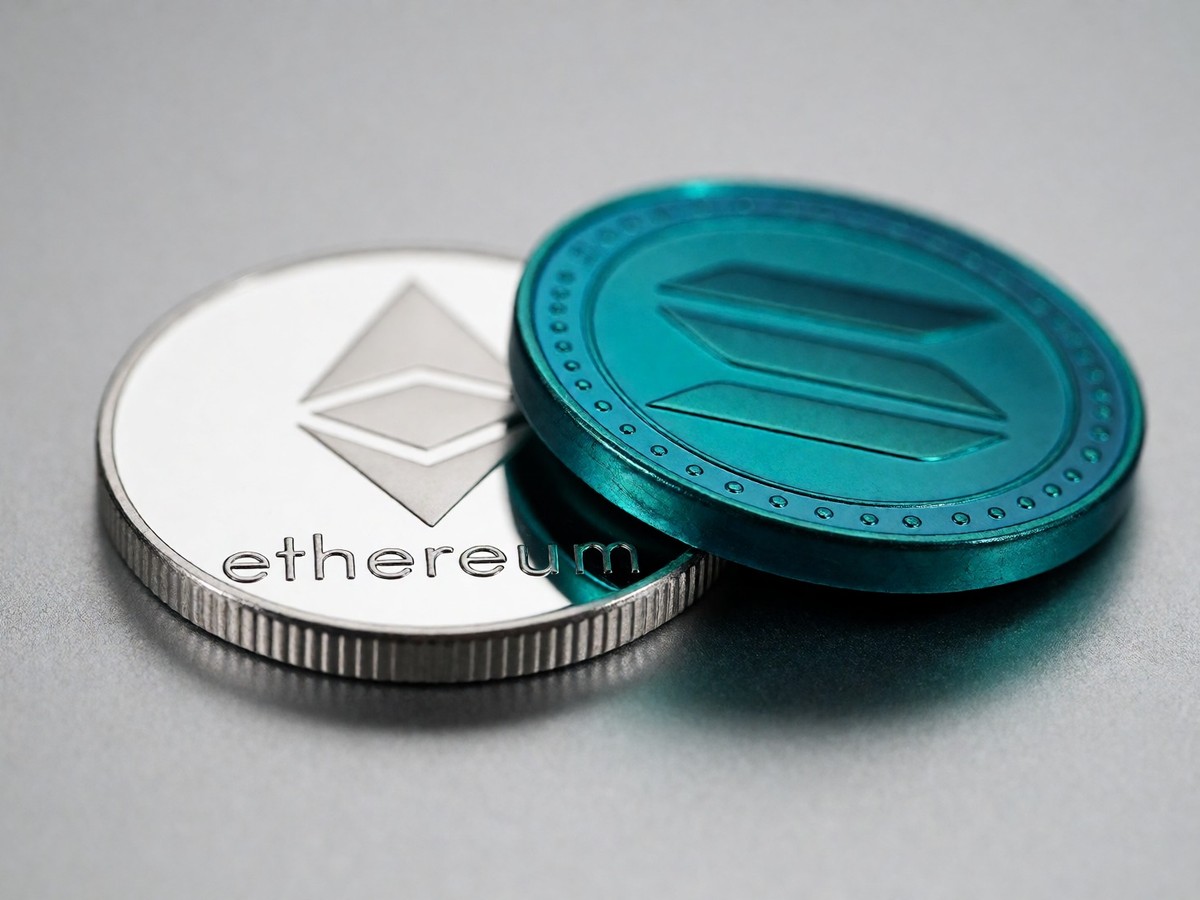
Architecture and speed
Ethereum utilizes a modular architecture that separates base layer security from Layer 2 execution. This design forces users to choose between the security of the mainnet and the speed of rollups. Solana employs a monolithic architecture that processes all transactions on a single chain. This design avoids the liquidity fragmentation seen in Ethereum’s L2 ecosystem.
| Metric | Ethereum L1 | Ethereum L2 (Arbitrum) | Solana |
|---|---|---|---|
| Block time | 12s | 250ms | 400ms |
| Sustained TPS | 15-30 | 2,000-4,000 | 3,000-5,000 |
| Finality | ~13 min | ~1 week | ~6s |
| Avg. Fee | $1-$10 | $0.01-$0.10 | $0.00025-$0.01 |
Solana handles 3,000 to 5,000 sustained transactions per second. It reaches 65,000 theoretical transactions per second under optimal conditions. Ethereum L1 processes only 15 to 30 transactions per second. If you prioritize scale, look at Ethereum’s Layer 2 solutions like Arbitrum or Base. These rollups achieve 2,000 to 4,000 transactions per second with fees between $0.01 and $0.10. Post-EIP-4844, Ethereum L2 fees dropped 10 to 100 times because of new blob data for rollups. Solana wins on speed and cost for high-frequency applications. Ethereum’s block time is 12 seconds, while Solana provides 400ms blocks. Ethereum’s finality takes about 13 minutes for two epochs, whereas Solana achieves 6-second rooted confirmation. Solana’s fee pricing uses priority fees plus base fees, typically between $0.00025 and $0.01.
Developers and economics
Ethereum maintains a mature developer ecosystem with over 4,000 monthly active developers. Most builders use Solidity to write contracts for the Ethereum Virtual Machine. Solidity offers a low learning curve for JavaScript developers. Solana developers use Rust or C to benefit from memory safety and parallel execution via the Sealevel runtime. Solana’s Anchor framework simplifies program development with declarative macros and account validation. Ethereum’s developer pool includes over 20,000 active participants and extensive documentation.
Solana fees are a fraction of a cent. This low cost benefits gaming and social platforms that require millions of micro-transactions. Ethereum L1 fees fluctuate based on demand and can reach $10 or more. You should avoid Ethereum L1 for high-volume applications because the gas costs will consume your margins. Solana developer salaries are high. This exceeds the $120,000 to $200,000 range for Ethereum developers. Solana’s account model also requires developers to manage explicit state through accounts. Audit fees for Solana programs are 10% to 30% higher because the talent pool is smaller. Can a project survive these higher development costs while maintaining competitive pricing?
Security and market interest
Ethereum provides security with 900,000 validators and a nine-year track record. Solana has 1,900 validators and faced several outages between 2021 and 2023. Because Solana requires validators to run high-spec hardware costing between $3,000 and $5,000, some critics argue that the network faces higher centralization risks than the more decentralized Ethereum. BlackRock’s Samara Cohen stated that Bitcoin and Ethereum meet the investment bar for ETFs. The SEC delayed its decision on Franklin Templeton’s Solana fund until November 14. VanEck and 21Shares filed for Solana ETFs, but the lack of Solana CME futures presents a hurdle for regulatory approval.
Solana’s market capitalization is $82 billion, which is 3% of the total crypto market value. Ethereum dominates DeFi with $60 billion in total value locked and over 1,000 protocols. Solana holds $8 billion in total value locked and 150+ protocols. Ethereum’s total stablecoin supply exceeds $100 billion. Solana’s stablecoin supply is $5 billion. If your project needs the absolute highest security, choose Ethereum.

Join the discussion