
AI orchestrators and the Decentraland economy
AI agents enable brand managers to act as orchestrators by automating creative workflows and data tasks. The Decentraland 2026 roadmap shifts focus toward a creator-driven economy with 90,654 LAND parcels and improved Desktop 2.0 performance.


AI agents direct the commerce workflows for brands within Decentraland. Brand managers use competitive agents to track category shifts and briefing agents to generate creative instructions. Content creation agents produce images and retail media ads to support product launches. This technology allows a positionless marketer to function as an orchestrator. These professionals manage multiple functions instead of performing manual tasks like copy editing or data crunching. This shift replaces the traditional assembly line model. The automation of remedial work lets users focus on campaign strategy and consumer experience. Lauren Livak Gilbert, the Executive Director of the Digital Shelf Institute, notes that the 2030 commerce leader functions as a cross-functional orchestrator who must manage many different organizational elements. Her research, which includes interviews with 33 digital leaders and a survey of nearly 100 people, describes how AI enables strategic thinking by removing hands on keyboard work. You should observe how these tools change the daily life of a brand manager. One professional manages the movement of many pieces rather than a single portion of a job.
Creator economies and the 2026 roadmap
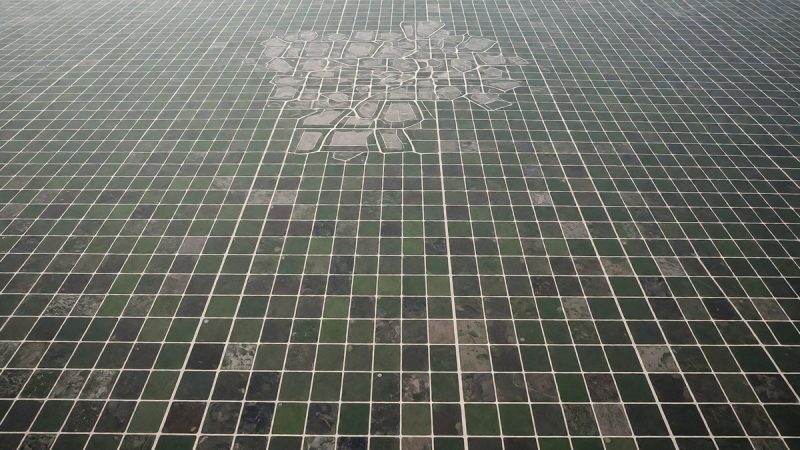
Creators drive the economic activity in the virtual world. The 2026 roadmap emphasizes creator rewards and the Desktop 2.0 client for improved performance and stability. Users build 3D environments on LAND parcels using pre-built scenes without needing to write code. This focus moves the platform away from land speculation toward a creator-driven economy. The digital marketplace allows for the purchase of wearables and emotes using MANA. Users earn MANA by creating content, participating in events, or contributing to platform development. There are 90,654 LAND parcels in the world. Developers use various tools to deploy applications in the 3D environment.
| Asset Type | Token Type | Utility |
|---|---|---|
| LAND | ERC-721 | Virtual real estate and governance |
| MANA | ERC-20 | Primary medium of exchange |
| Wearables | ERC-1155 | Avatar customization |
| Names | N/A | Digital identity |
Users customize avatars with unique clothing items purchased with MANA. Early investors and landowners want content on their property to attract visitors. This demand keeps the ecosystem active. Landowners can lease their virtual real estate to other users to earn revenue. Some users join through gaming communities or guilds that buy land for their members. Users build a variety of games, art installations, and social spaces on their land. The Desktop 2.0 client provides better visuals and a much more stable experience for users.
Governance and tokenomics
The Decentraland DAO manages the ecosystem through token holders. MANA holders and LAND owners submit and vote on all proposals to guide the platform. Each MANA token provides one unit of voting power. Users wrap MANA to create wMANA for voting purposes. LAND and Estate tokens provide 2,000 units of voting power. The DAO treasury funds grants, events, tools, and maintenance.
The market for virtual assets remains active despite previous volatility. MANA trades around $0.15, which is roughly 97% below the all-time high of nearly $5.90. The total supply of MANA is 2.193 billion. The current circulating supply is approximately 1.92 billion. The market cap for MANA is between $293 million and $296 million. MANA is an Ethereum ERC-20 standard token. In 2026, analysts predict a MANA price range between $0.45 and $0.85.
| Metric | Value |
|---|---|
| Total MANA Supply | 2.193 billion |
| Circulating MANA | ~1.92 billion |
| MANA Price | ~$0.15 |
| 2026 High Estimate | $0.85 |
One virtual real estate company purchased a plot of land for $2.43 million in late 2021. The total value of tokenized real-world assets reached $26.71 billion recently. MANA remains a utility token for all goods and services within the virtual world. Can the platform maintain its status as an open metaverse if land prices remain high?

Join the discussion