
Setting up a Scroll prover in the current market
Scroll expands its ecosystem following a $50 million funding round while the Ethereum Foundation allocates $9.856 million toward zero-knowledge proof technology. Hardware requirements for provers demand significant resources, such as 128 GB of RAM for a single Aztec agent.

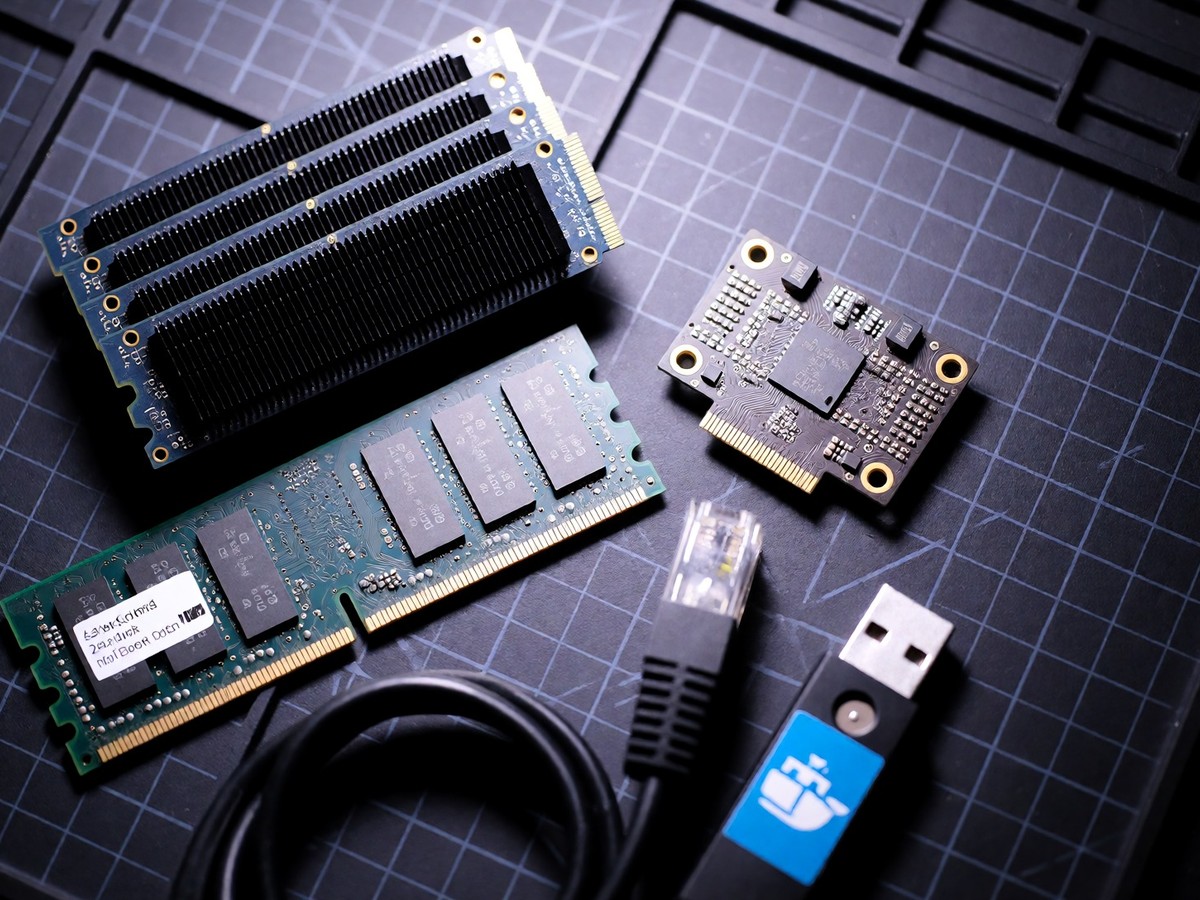
Ethereum infrastructure and Scroll deployment
The Ethereum Foundation awarded $9.856 million in the first quarter to support zero-knowledge proof technology and protocol research. This funding targets the development of ZK-rollups and other scaling solutions. The foundation also sponsors the 2025 Academic Grants Round, which provides $1.5 million for research across disciplines like cryptography and consensus design. Researchers from academic institutions and universities may apply for these funds. Scroll, an Ethereum scaling startup, raised $50 million at a $1.8 billion valuation to expand its ecosystem. The network currently supports about 1 million unique addresses and 16 million transactions. To start an l2geth node, you need a machine comparable to an AWS t3.2xlarge instance and 4TB of SSD storage. The archive snapshot reaches nearly 2TB, so insufficient disk space will stall your synchronization. You must provide a fully synced Ethereum Mainnet RPC endpoint via the –l1.endpoint flag. Using the –scroll flag helps you run against Scroll Mainnet and automatically imports the up-to-date genesis config. For macOS users, you must add the /volume directory to the list of shared paths in Docker Desktop settings. You can also use the latest l2geth release from GitHub to ensure compatibility. The Ethereum Foundation also provides a 2026 PhD Fellowship Program, which includes $24,000 stipends for researchers in fields like computer science and economics. These fellowships support academic work that produces formal research in conferences or journals.
Polygon zkEVM and validium constraints
Polygon faces distinct challenges as it transitions from its PoS chain toward a zkEVM Validium. Validiums provide higher scalability through off-chain data storage, but they depend on data availability managers. The heavy reliance on data availability managers means that the risk of off-chain data aggregation and accessibility is a significant concern for every developer who now utilizes the Polygon zkEVM validium infrastructure in this market. Currently, Polygon zkEVM still relies on calldata for data management and lacks updates to post L1 blobs. These limitations affect efficiency and transaction costs, leaving the solution lagging behind other emerging technologies. The lack of a clear roadmap regarding "stage 2" status or strategic partnerships causes uncertainty for developers. Many prominent projects already left the Polygon ecosystem because of these issues. I find the lack of transparency regarding the Agglayer release date problematic for ecosystem planning. Rollups rely on the Ethereum mainnet for data, which results in lower scalability and higher fees. In contrast, validiums use off-chain storage to reduce costs and increase throughput. This makes validiums more suitable for Web3 gaming and social dApps, while rollups suit high-value DeFi applications. Polygon no longer holds its reputation as a "cool" solution as other Layer 2s like Arbitrum and Optimism gain traction. Do developers prefer the security of rollups over the scalability of validiums?
Prover hardware requirements
Running a prover requires data center-grade infrastructure and specialized engineering expertise. Aztec provers require significant hardware to manage the job queue and distribute work to agents. A single agent needs 32 core or 64 vCPU, 128 GB of RAM, and 10 GB of SSD to function. If you run multiple agents on a single machine, you must adjust the PROVER_AGENT_COUNT. For instance, two agents require 64 cores and 256 GB of RAM. You must also generate an Ethereum private key for the prover publisher to submit proofs to L1. This account needs ETH. You must also ensure the broker machine’s port 8080 stays accessible from all agent machines so the agents can communicate. Check the broker with a curl command. If the agent fails to pick up jobs, you should check if the PROVER_ID matches your publisher address to ensure the connection is valid. To verify the broker container runs correctly, you should use the docker compose ps command. Prover agents must communicate with the broker. You need to create a directory structure like aztec-prover-node/prover-node-data to store all necessary files. You must also configure environment variables such as DATA_DIRECTORY and PROVER_BROKER_HOST in your .env file to function. You should keep an eye on the logs, assuming you already understand how to use Docker.




Join the discussion